My M’muock/Bangwa Traditional Wedding in Cameroon
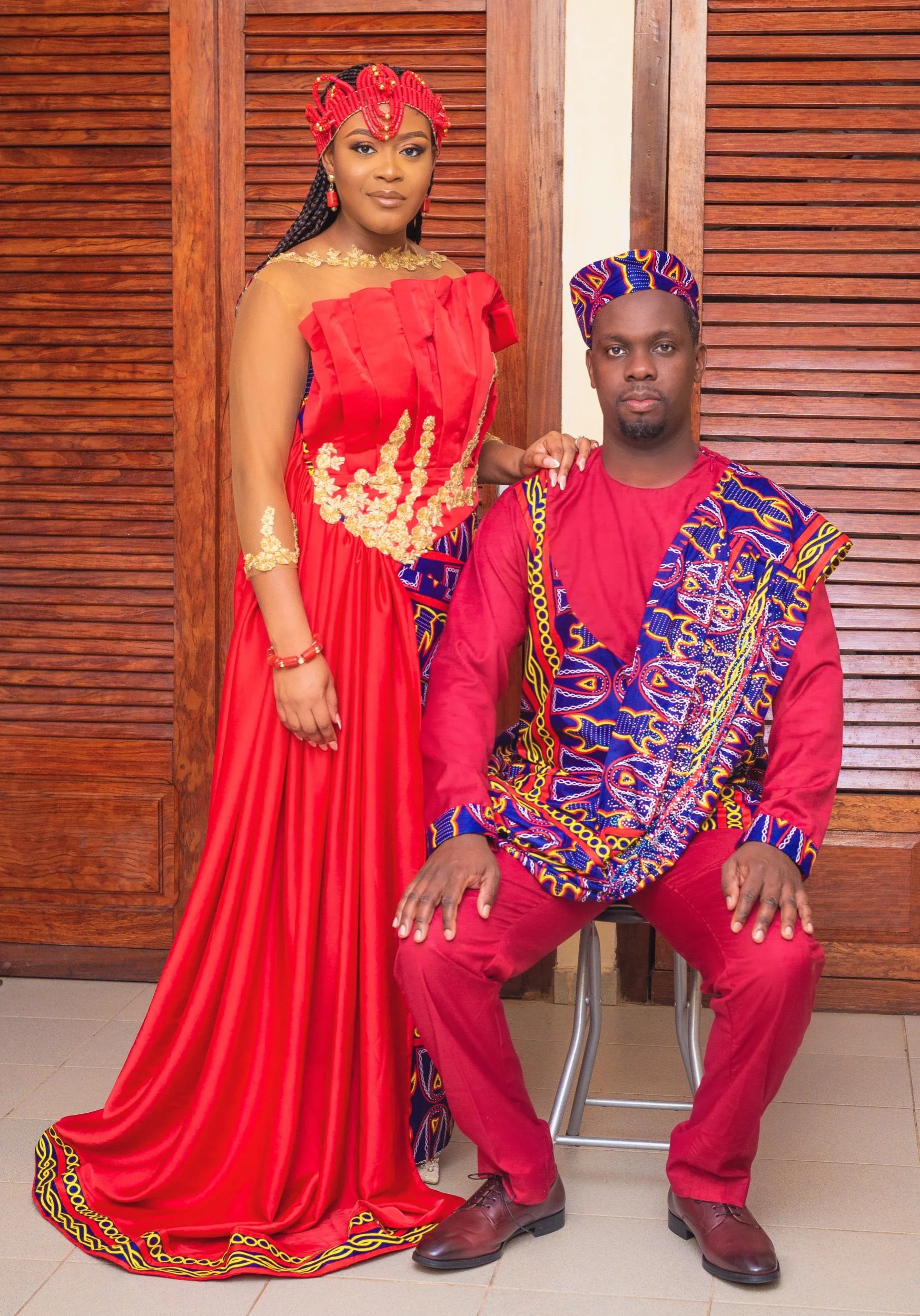
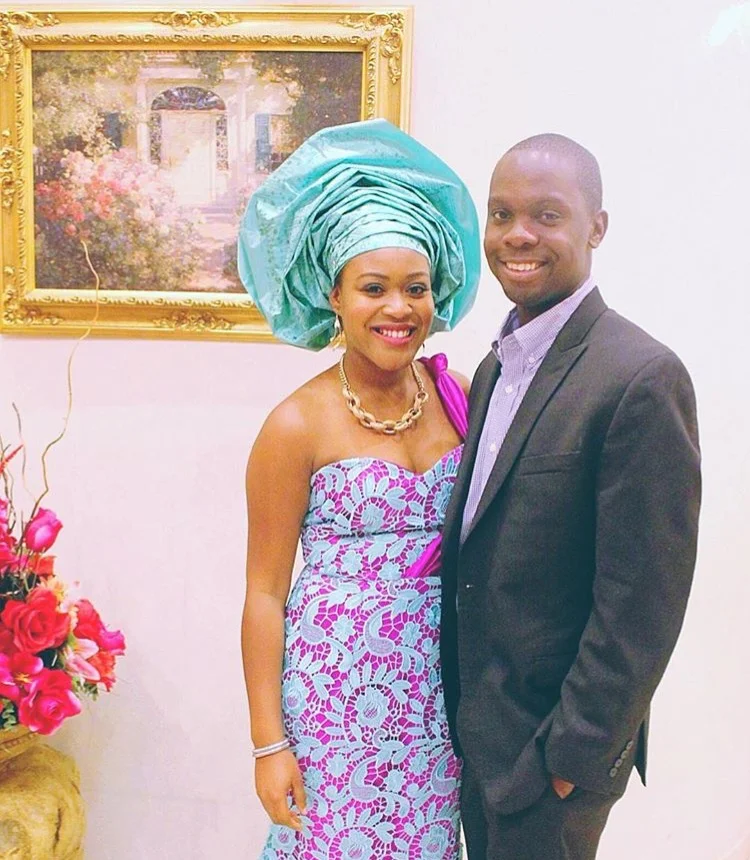
On November 21, 2021, my now-husband and I participated in the second of our 3 wedding celebrations. This time, it was in my home country of Cameroon. It was a blessing to make my return to Cameroon after 8 long years, and it was equally thrilling to have my fiance and his family in tow as they travelled to the African continent for the very first time.
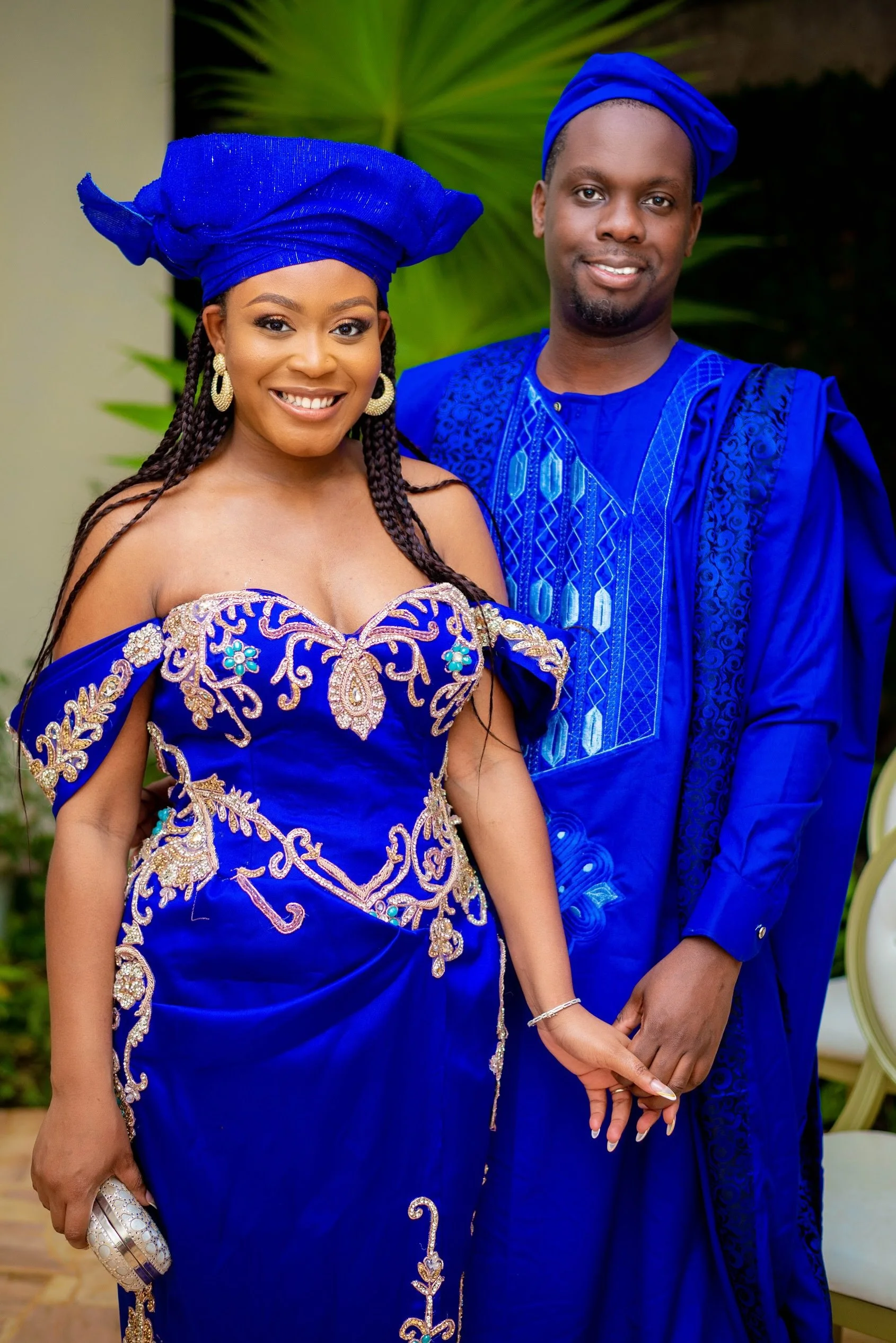
It was really important to my fiance and me that we fully participated in the M’muock traditional wedding ceremony (while adhering to COVID-19 guidelines) and celebrated our union in Cameroon. Unfortunately, we could not travel to the Fondom of M’muock (also called Fosimondi) due to civil disruptions and general inaccessibility, but with my aunt and uncle’s help we were able to bring our culture to the country’s capital city, Yaounde, and host an amazing event.
A little about the M’muock (Bangwa) People
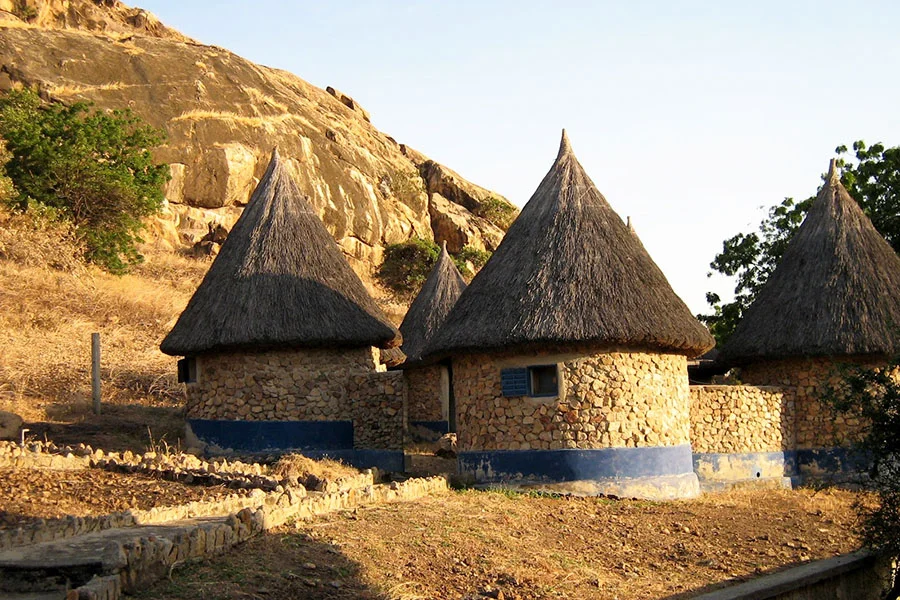
“Bangwa” describes all the inhabitants of a cluster of nine chiefdoms — including my tribe M’muock — although they do not quite constitute a tribe or a single political unit. The M’muock people are one of the numerous smaller ethnic groups within the Bamileke complex with its own unique identity and history. The tribe has one of South-West Cameroon’s oldest recorded dynasties and “officially” split from the Bamileke during colonial administration in the early 20th century. M’muock is in the Grasslands region, a somewhat inaccessible hilly and mountainous area in south-west Cameroon covered by an equatorial forest in the south and a savannah in the north.
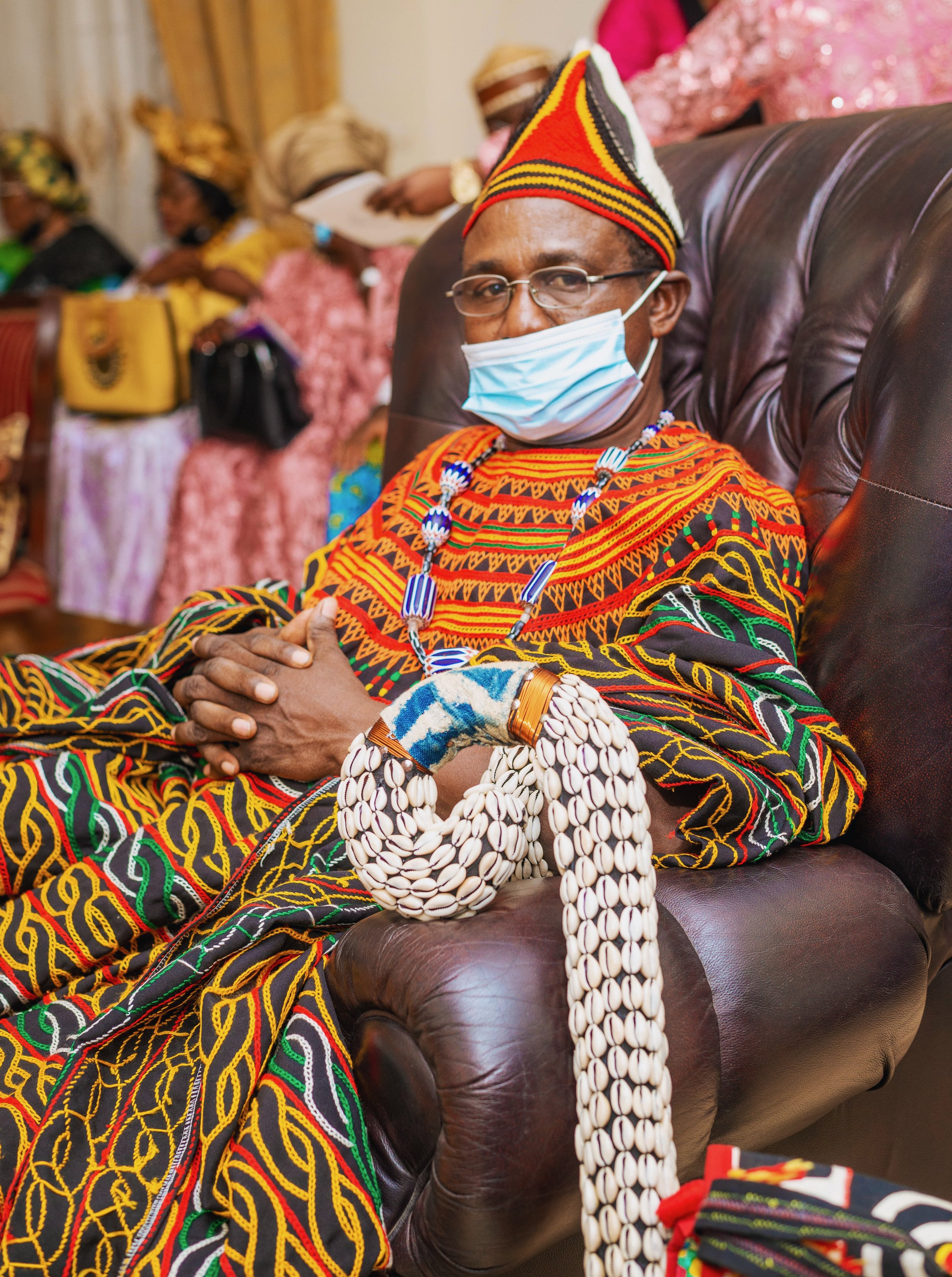
Like most of the western Grasslands people, political authority is vested in a village chief, who is supported by a council of elders. The chief is typically selected as the heir by his father but is officially elected to the position by his predecessor's council and is often an elder member of the most powerful family within the community. The chief is recognized as the de facto owner of all the land that belongs to a given village and is seen as the dispenser of justice. Social behavior and customs within the village are further guided by associations and secret societies, all of which fall under the auspices of the village chief.
Fortunately for us, my uncle is the chief of our village, so with his blessing and cultural knowledge, we were able to engage in the traditional rituals as closely as we could while in the middle of a pandemic.
Akin to traditional oral history that is passed down to the next generation and to immortalize this important aspect of my culture, I wanted to ensure I shared the customs for any future descendants to note and potentially emulate.
Therefore, let us explore the rich cultural tapestry that is a M’muock traditional wedding.
1. Nkwateh Ntso Ndieh: The “Knock Door”
The wedding festivities begin with a “knock door”, which is a symbolic representation of the goom’s family indicating their son’s intentions for the potential bride and to seek her hand in marriage. Gifts such as kola nuts, palm wine, and fabrics are presented to the bride's family, symbolizing goodwill, harmony and a desire for unity.
2. Ntseh Mgweh Fiih: Make the right choice
The negotiation of the bride price is a central aspect of the Bangwa wedding. This intricate process involves the groom's family presenting gifts to the bride's family. The negotiation is a delicate dance, emphasizing respect and honor, as well as the value the groom places on the bride's lineage.
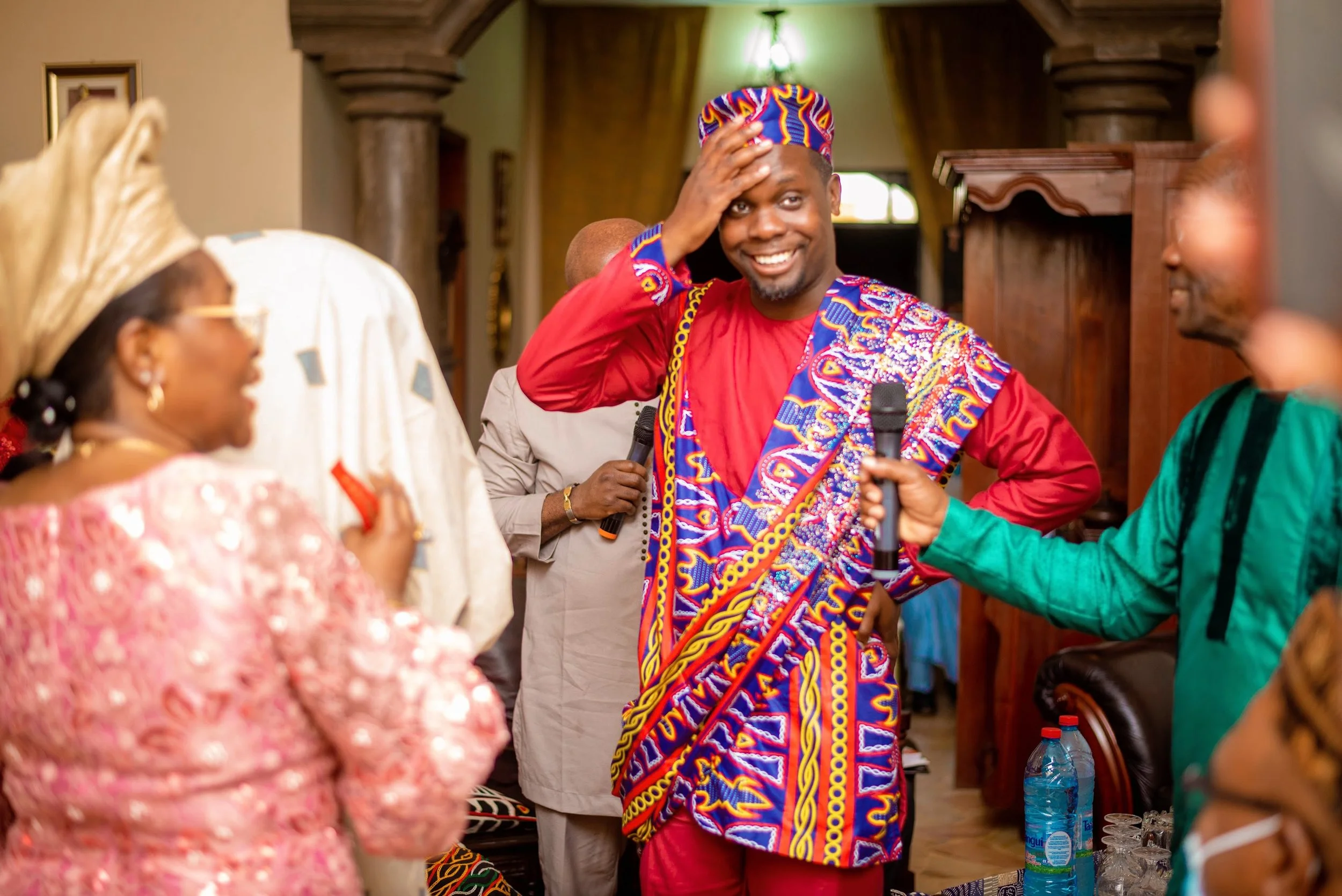
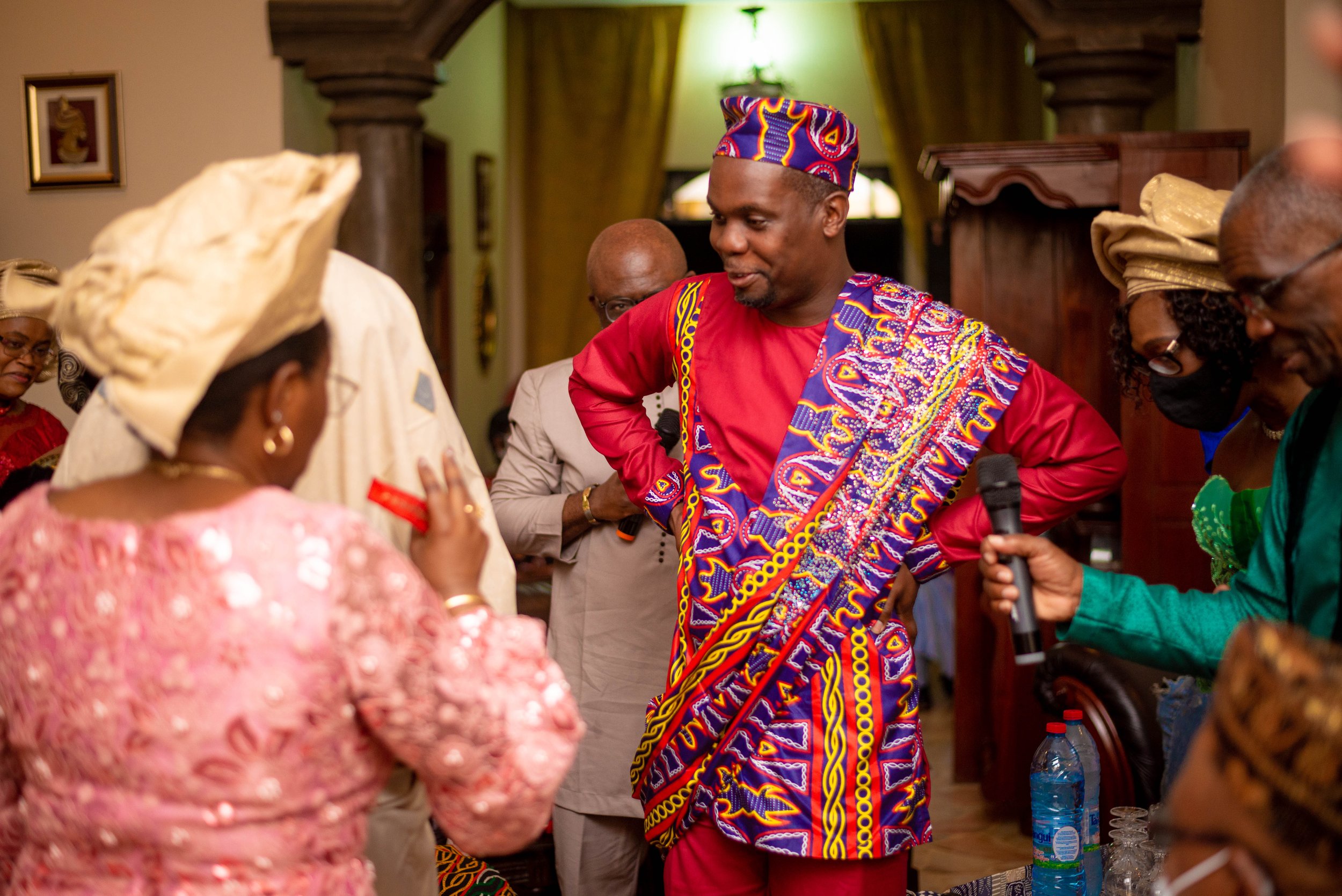
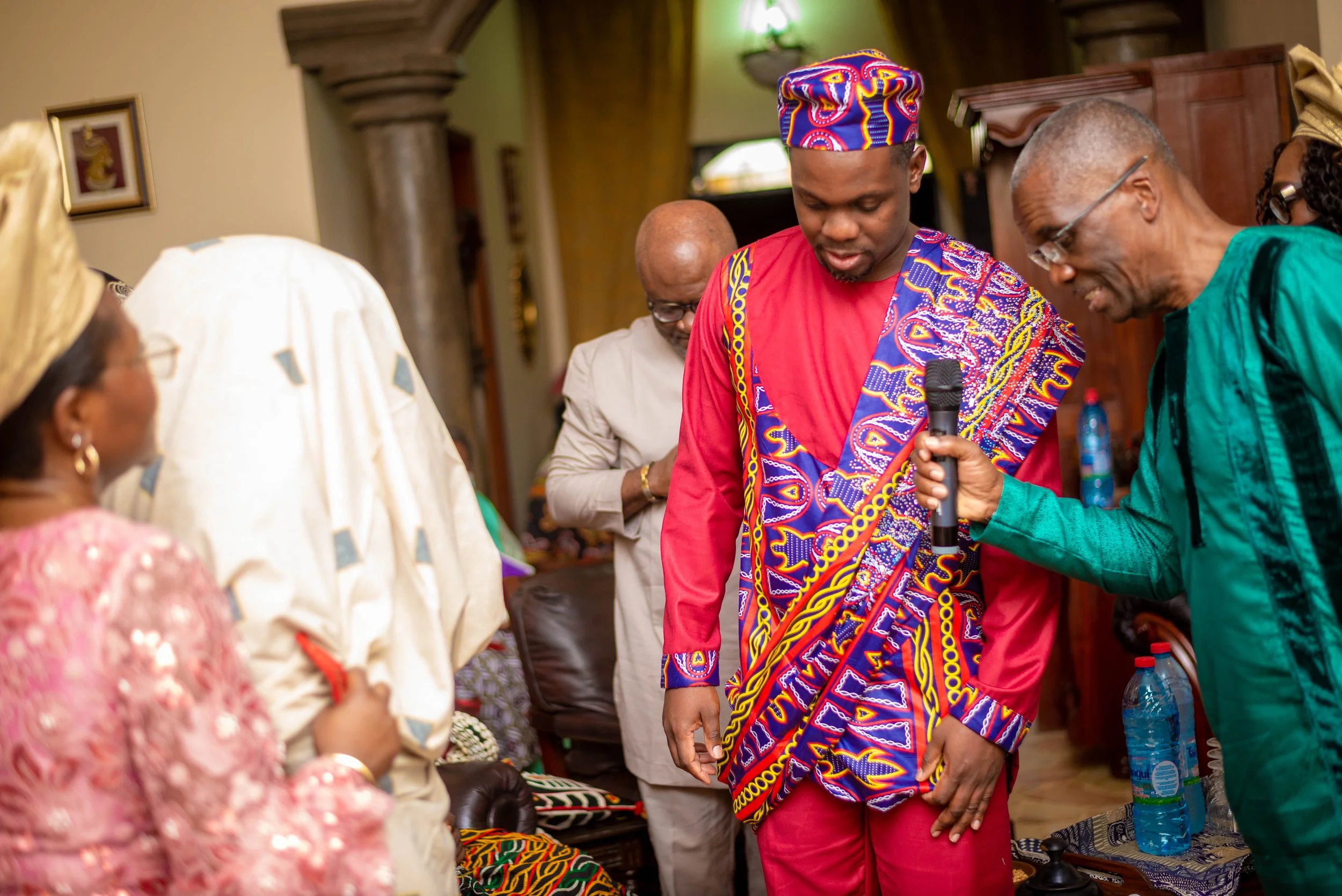
As the groom's party enters the home, there is excitement and anticipation in the air as they are faced with a test of discernment. Along with other women in my family, I was covered with traditional fabrics, thus concealing my identity. The quest: my groom had to determine which hooded figure was really his bride. After a conversation between the families, littered with humor, playfulness and further negotiation of the bride price, a heartfelt eruption resonated in the room after the groom made the correct identification.
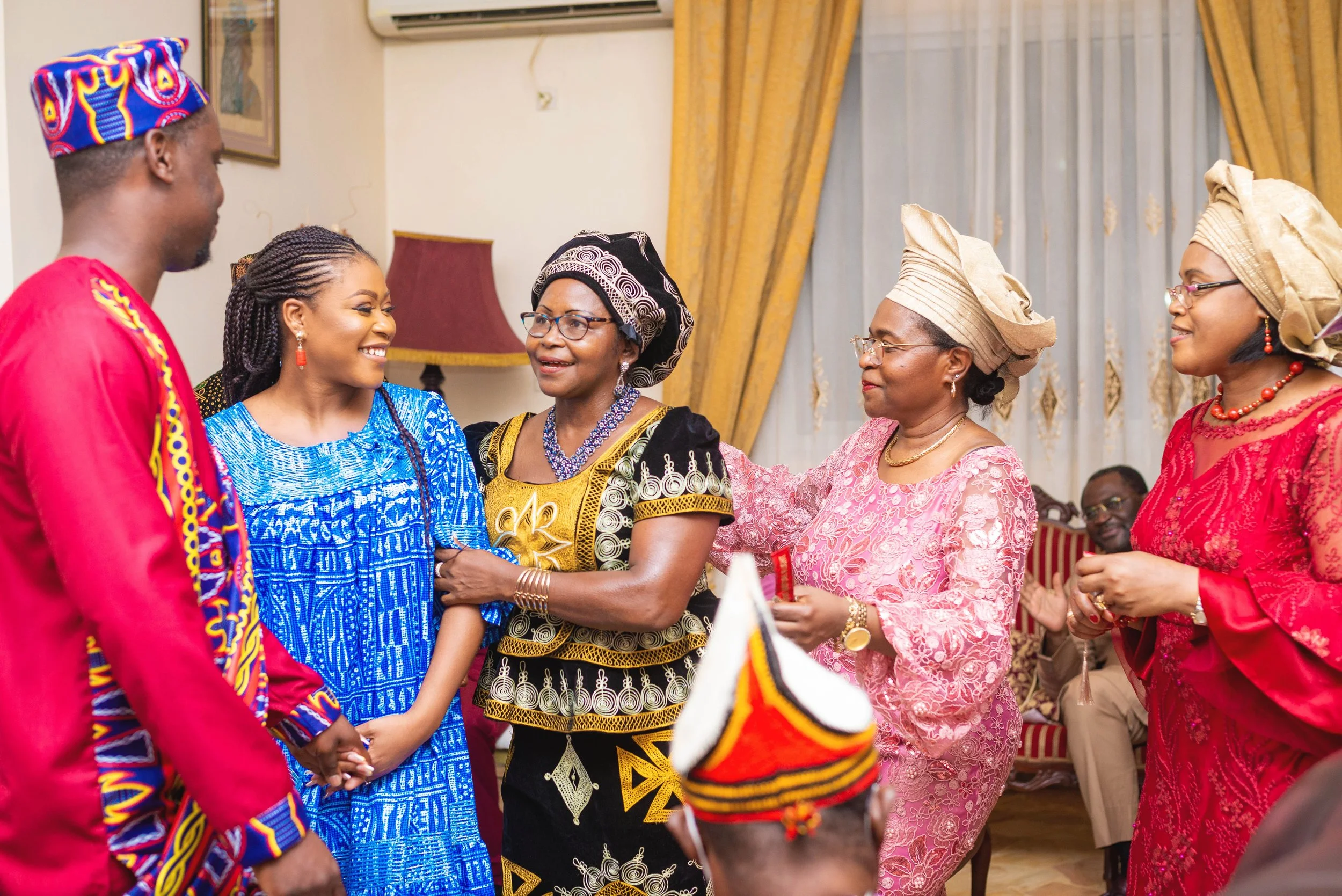
3. Ntseh Mgweh Fiih Ambuoh Lah: A New Family Bond
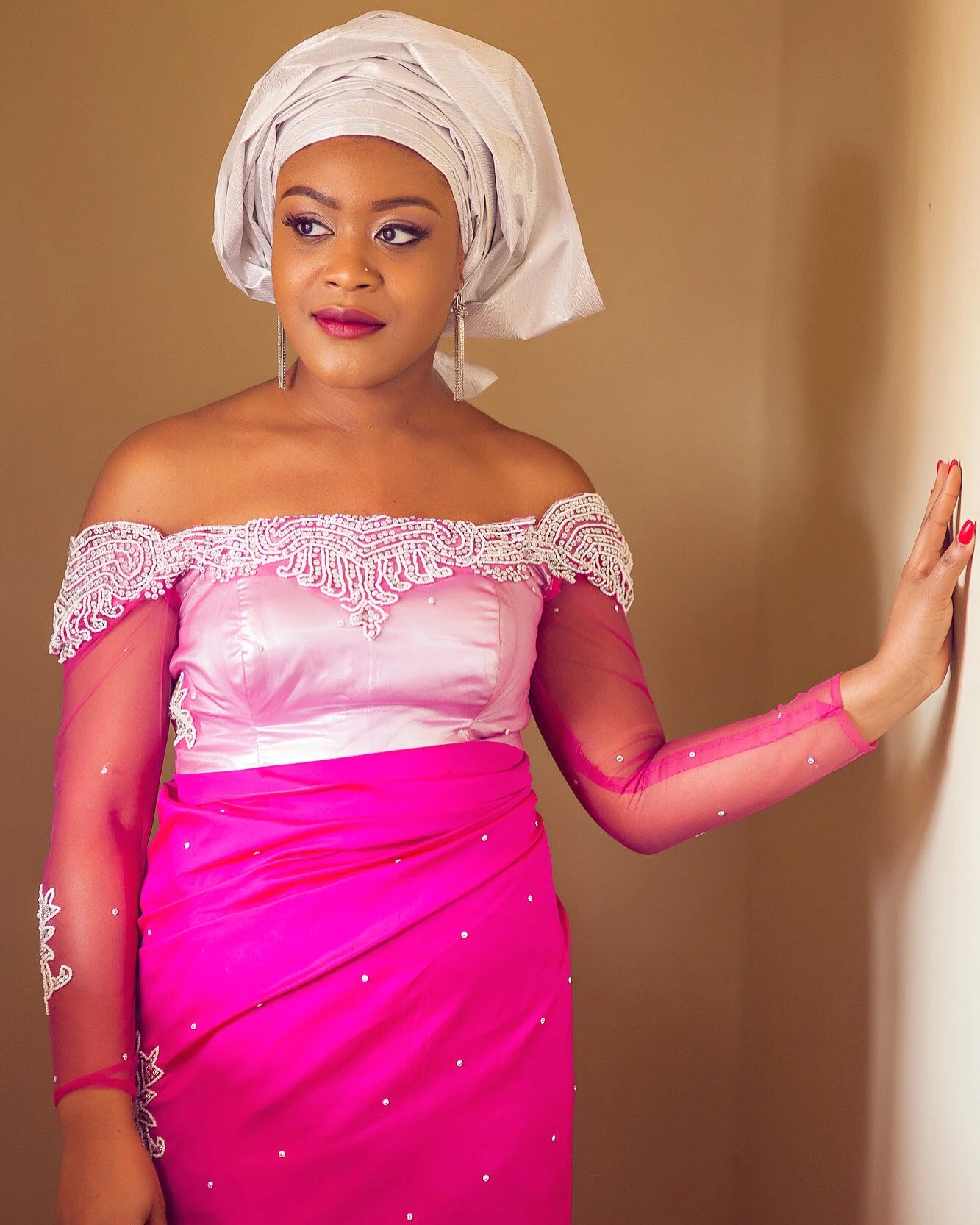
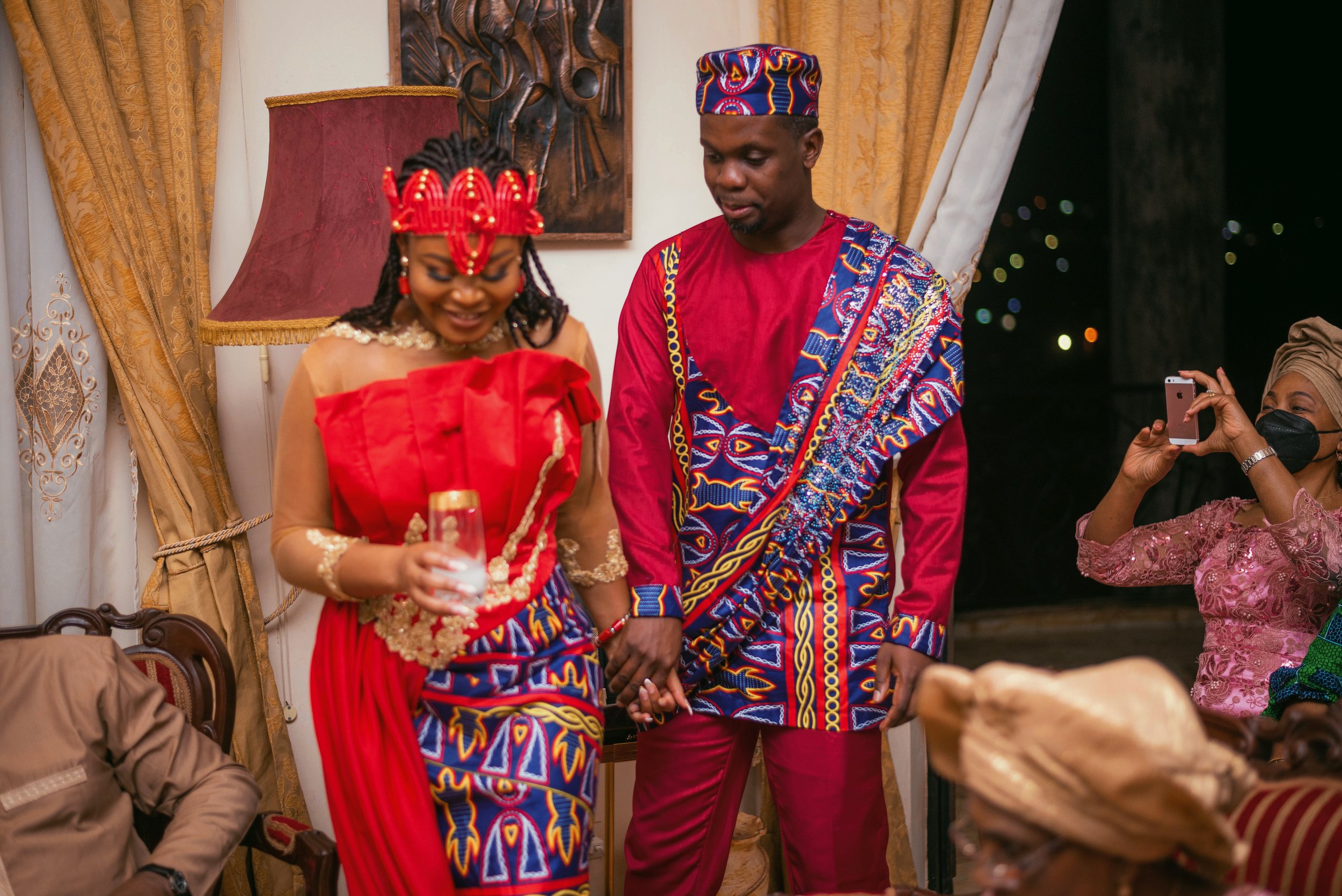
Following the groom’s successful selection, the bride is then adorned in formal traditional attire, knows as the toghu with intricate ornamentation and colourful beads. I modernized this tradition a little by wearing a dress. This change of clothing commemorates the transformation of the bride and is a celebration of her beauty as well as homage to her cultural identity. I was presented to my new family, a gesture that symbolized the formal merger of the two families and recognition of our union.
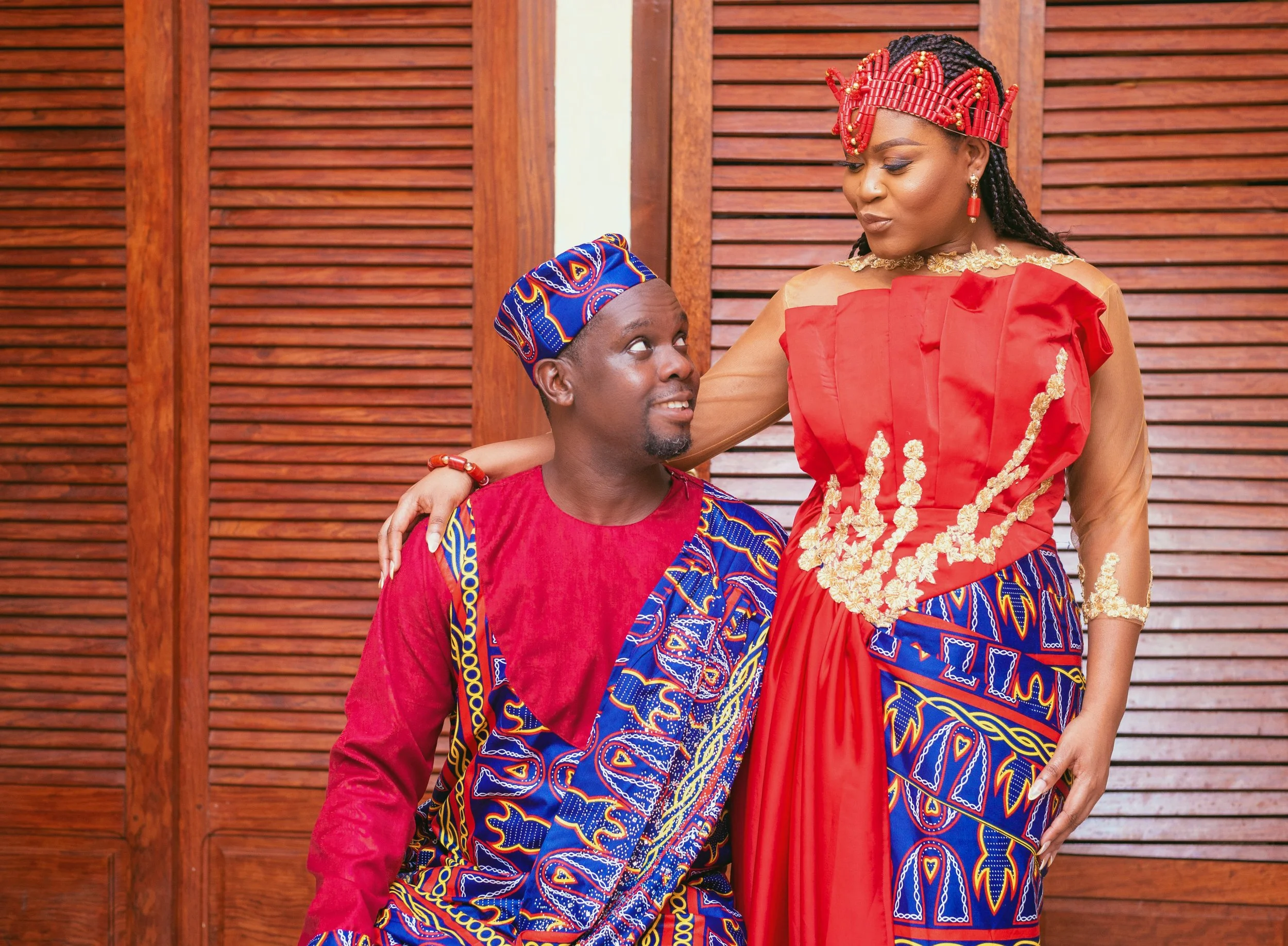
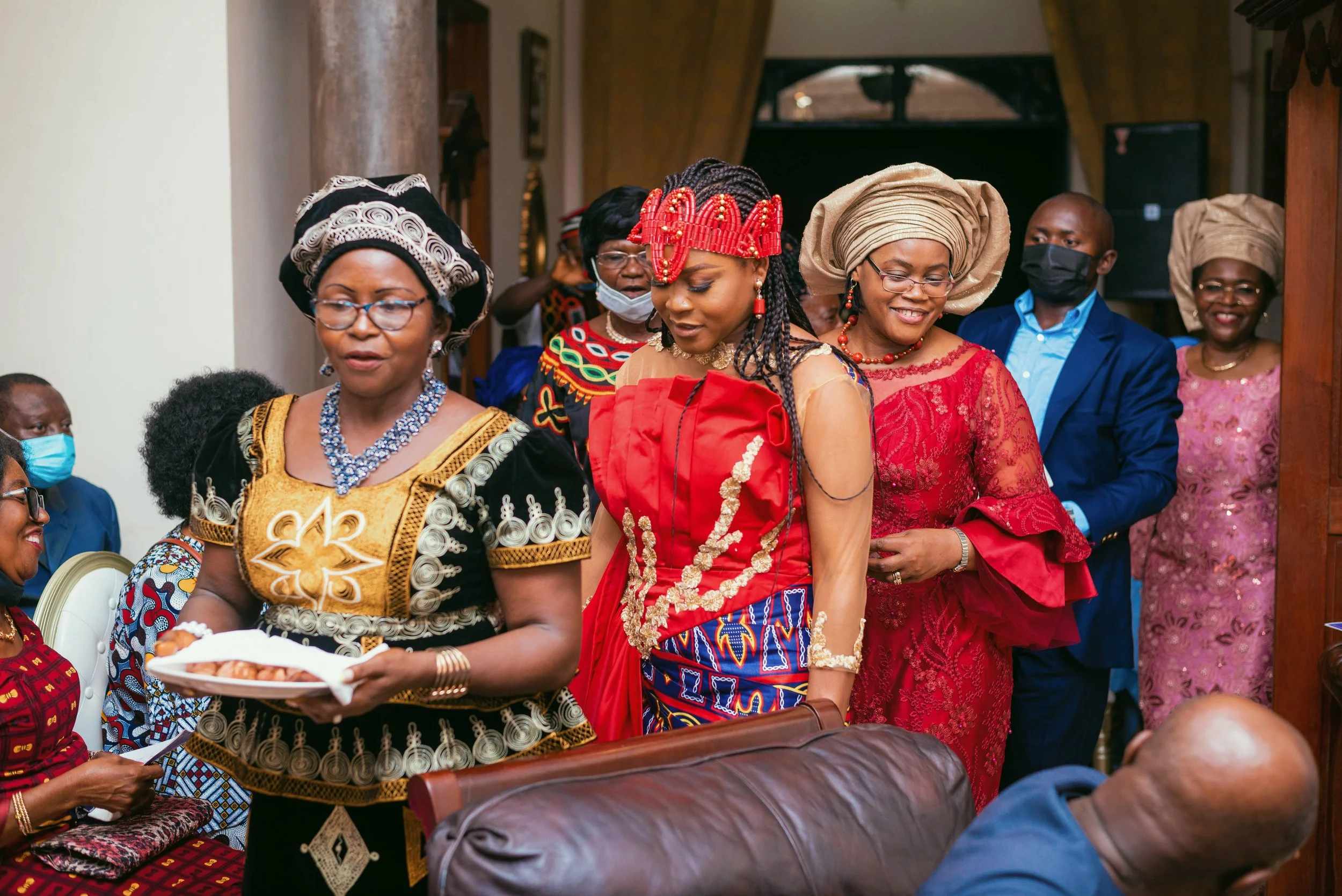
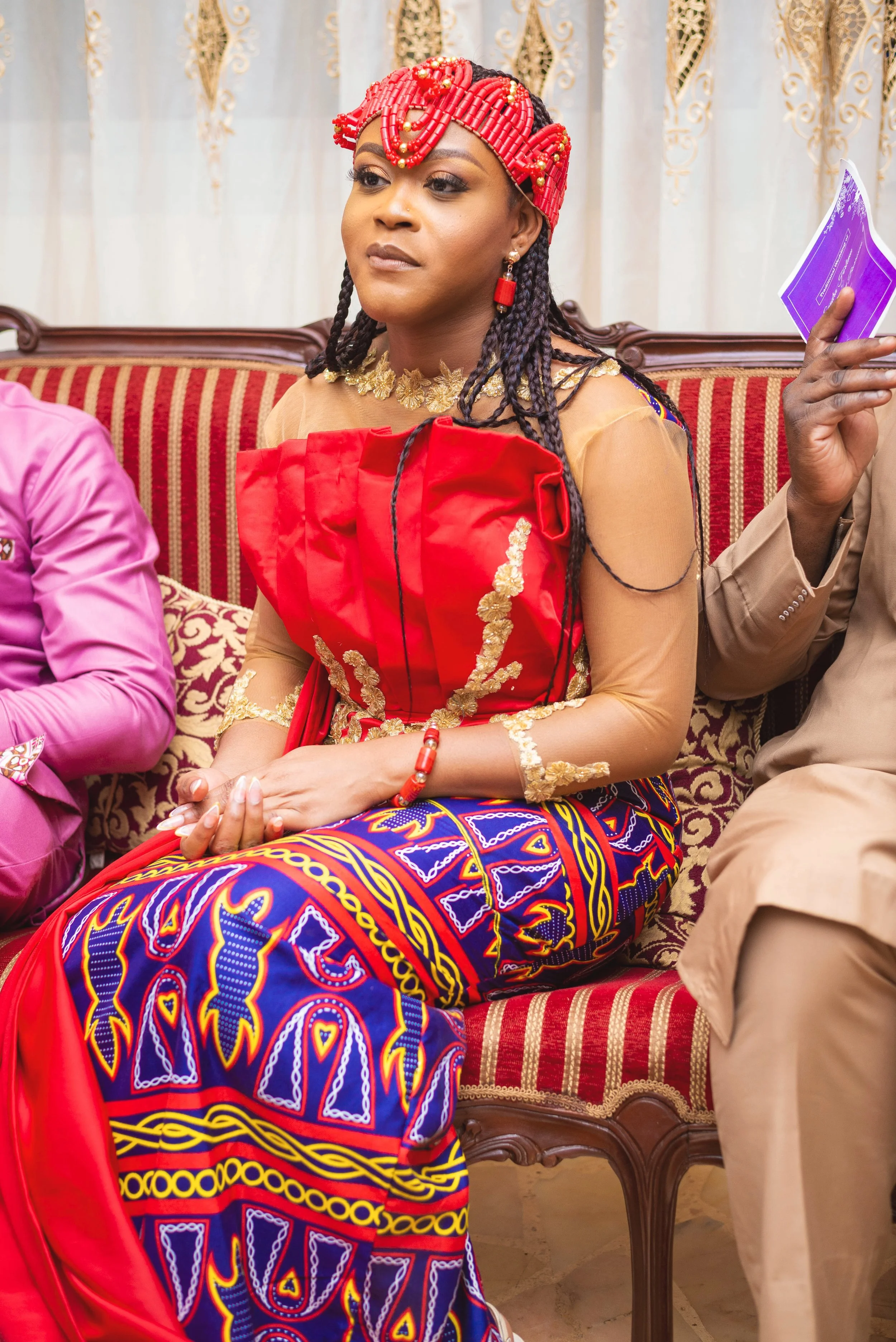
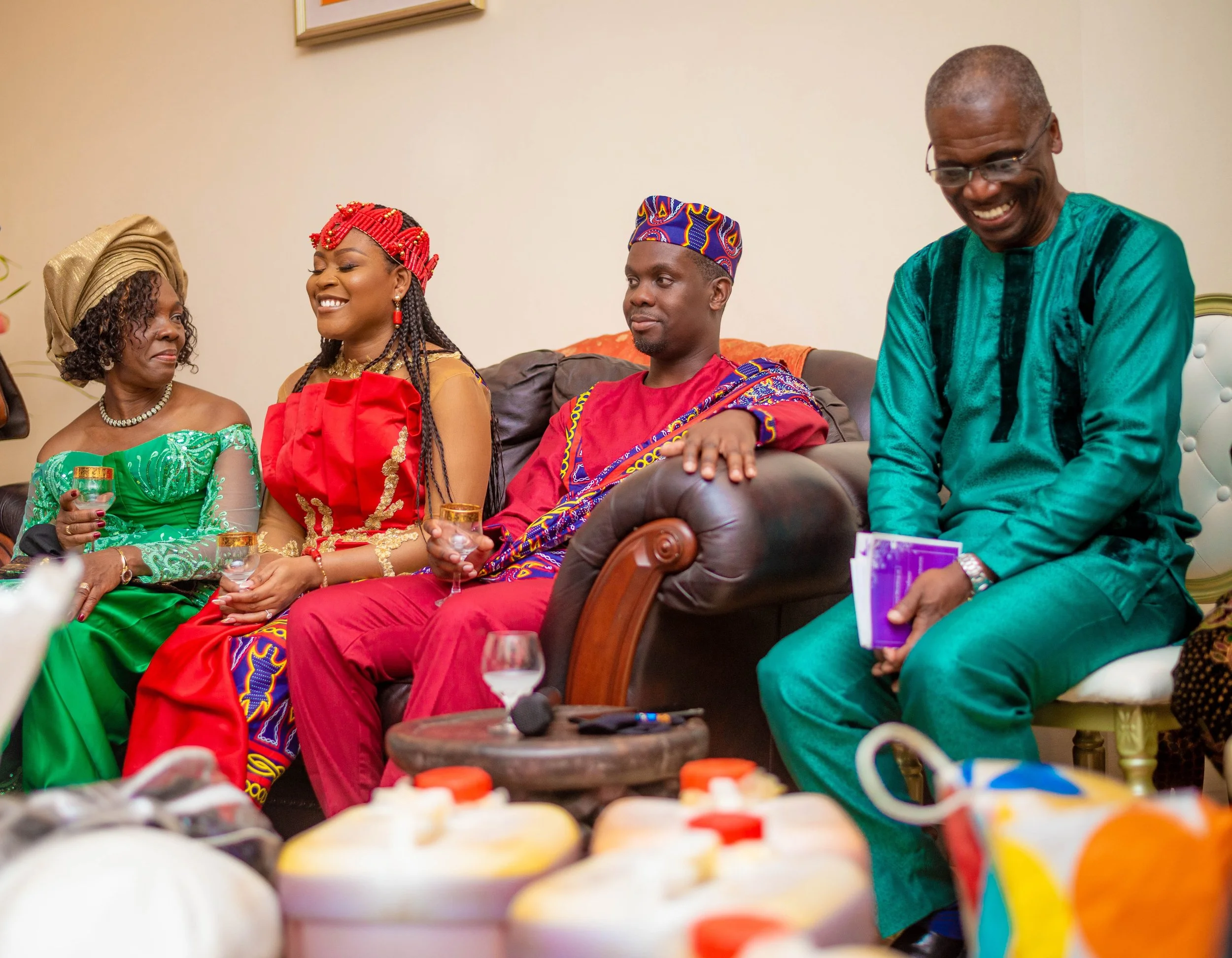
4. Nouh Four Belouoh Ntseh Ndeuh: Honoring Ancestral Blessings
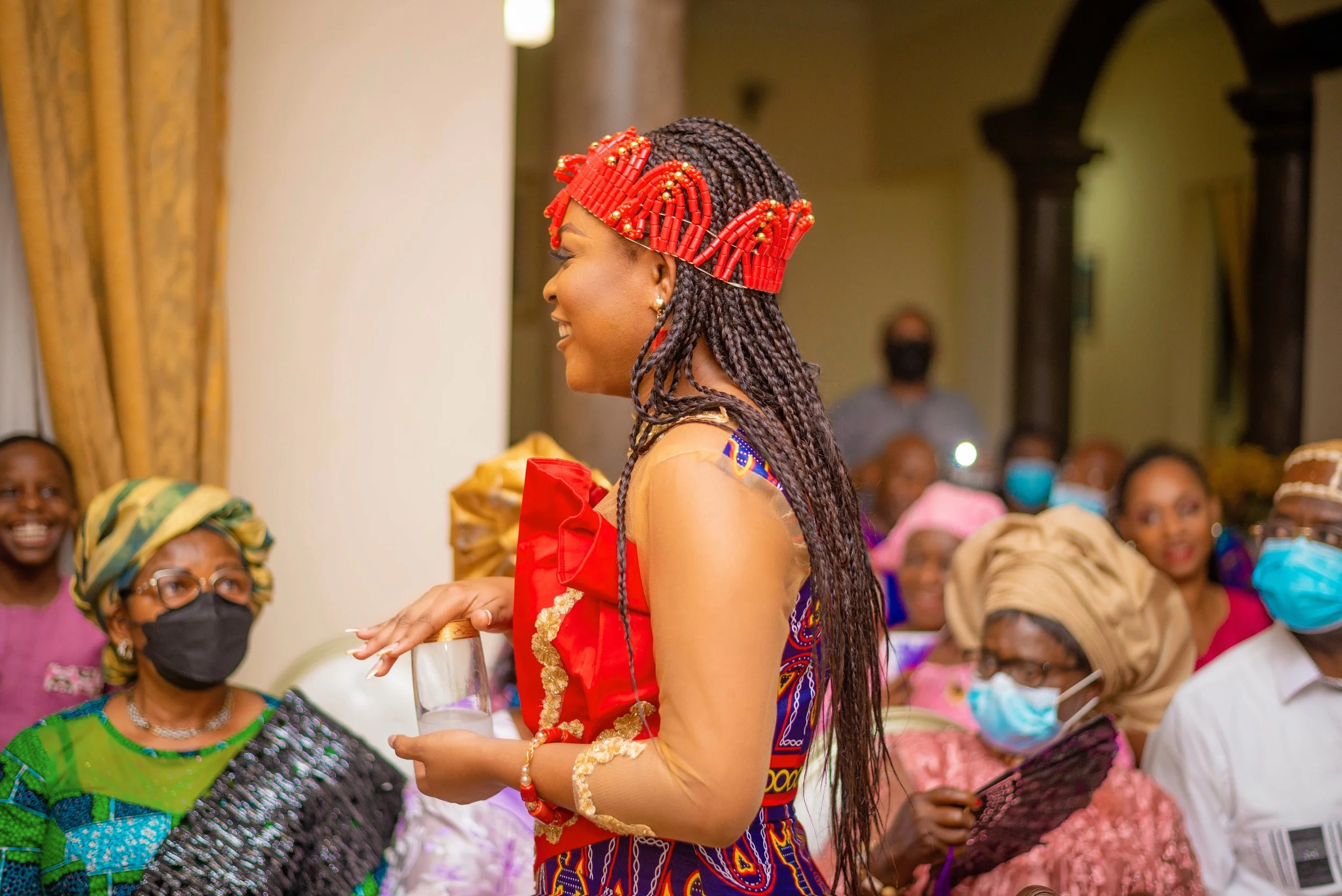
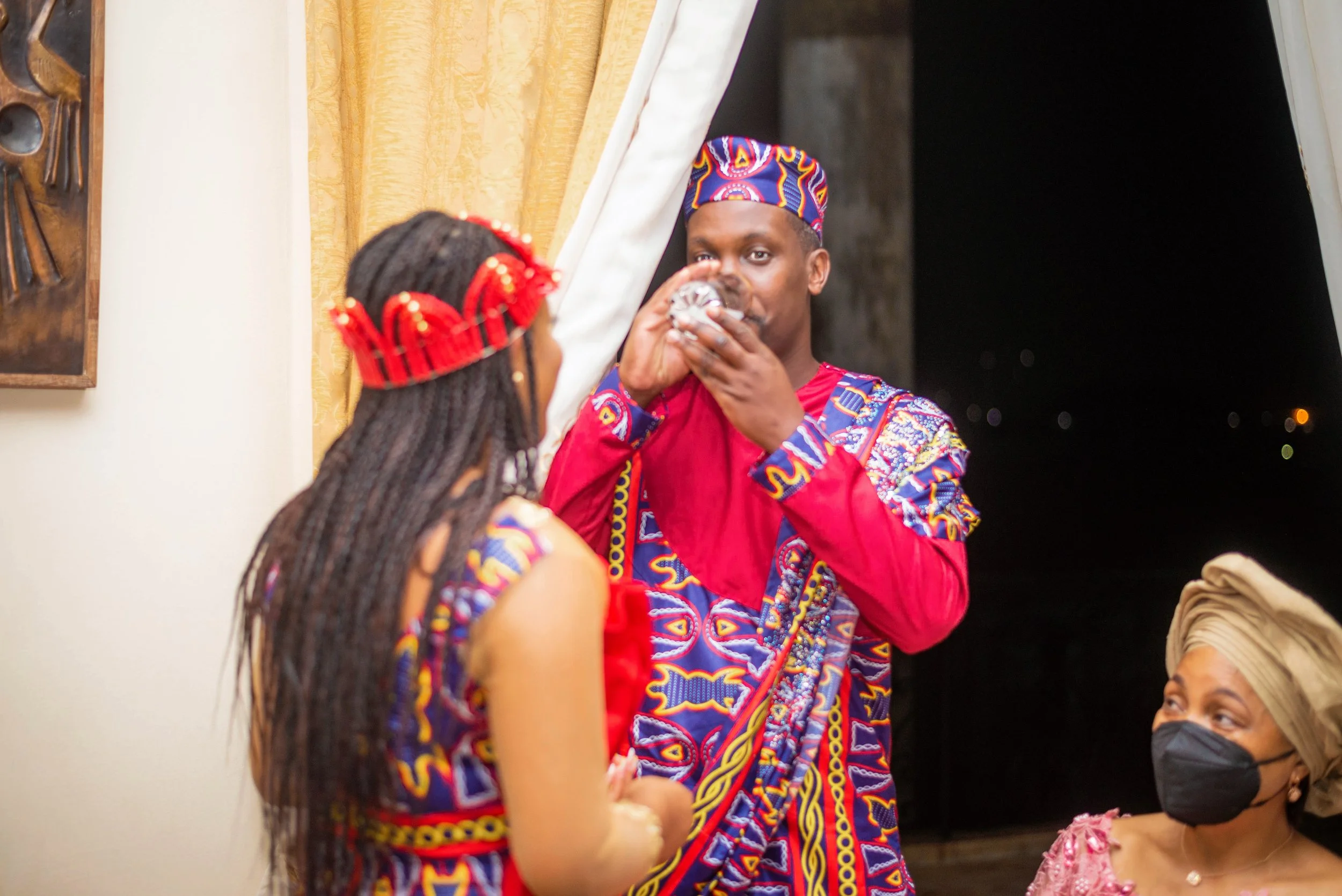
I ask for the blessings of my father who officially consents to the wedding by drinking palm wine. He offers the palm wine to me and instructs me to find and identify the groom in the crowd. When I find him, I offer him the wine - another ritual sealing our union.
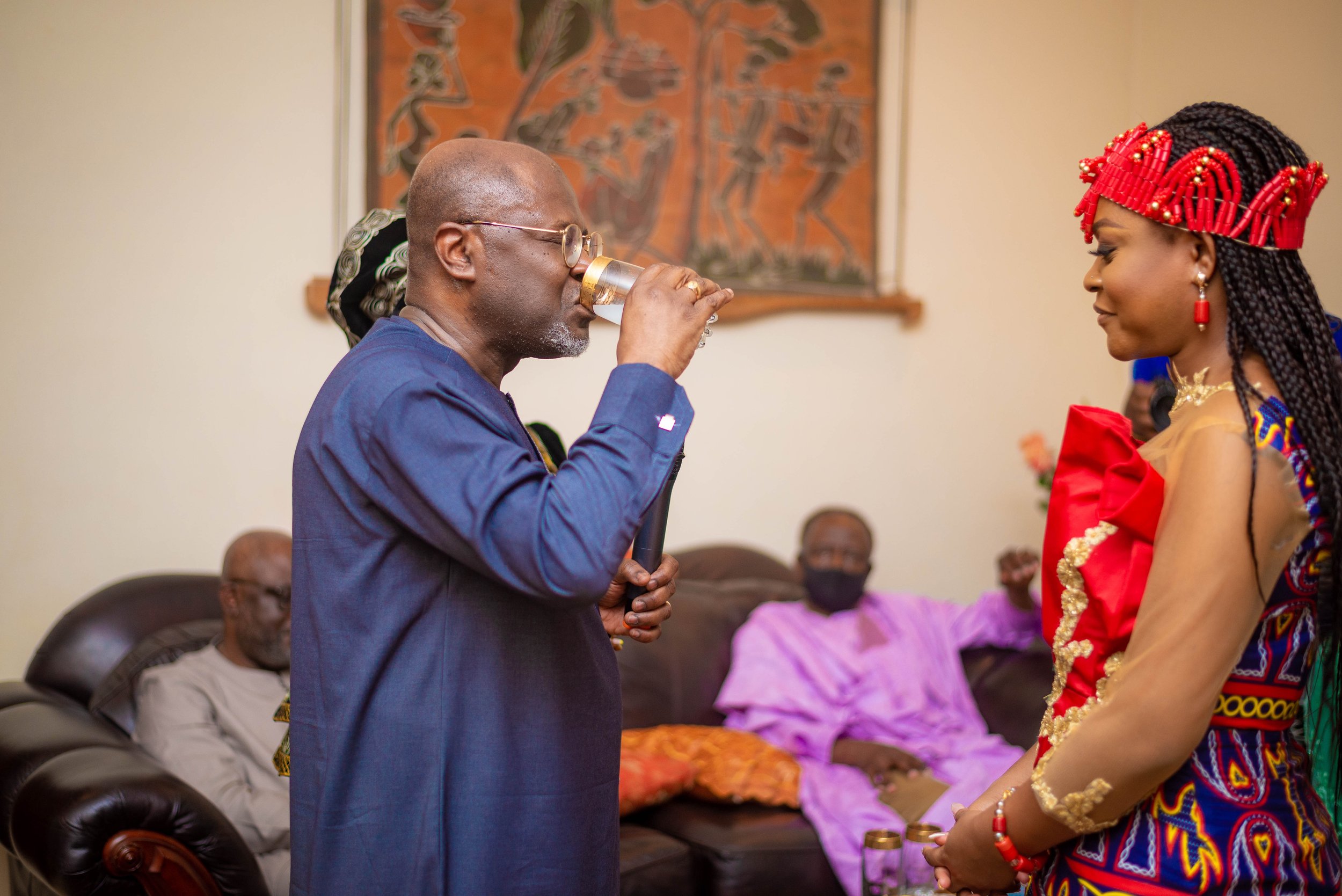
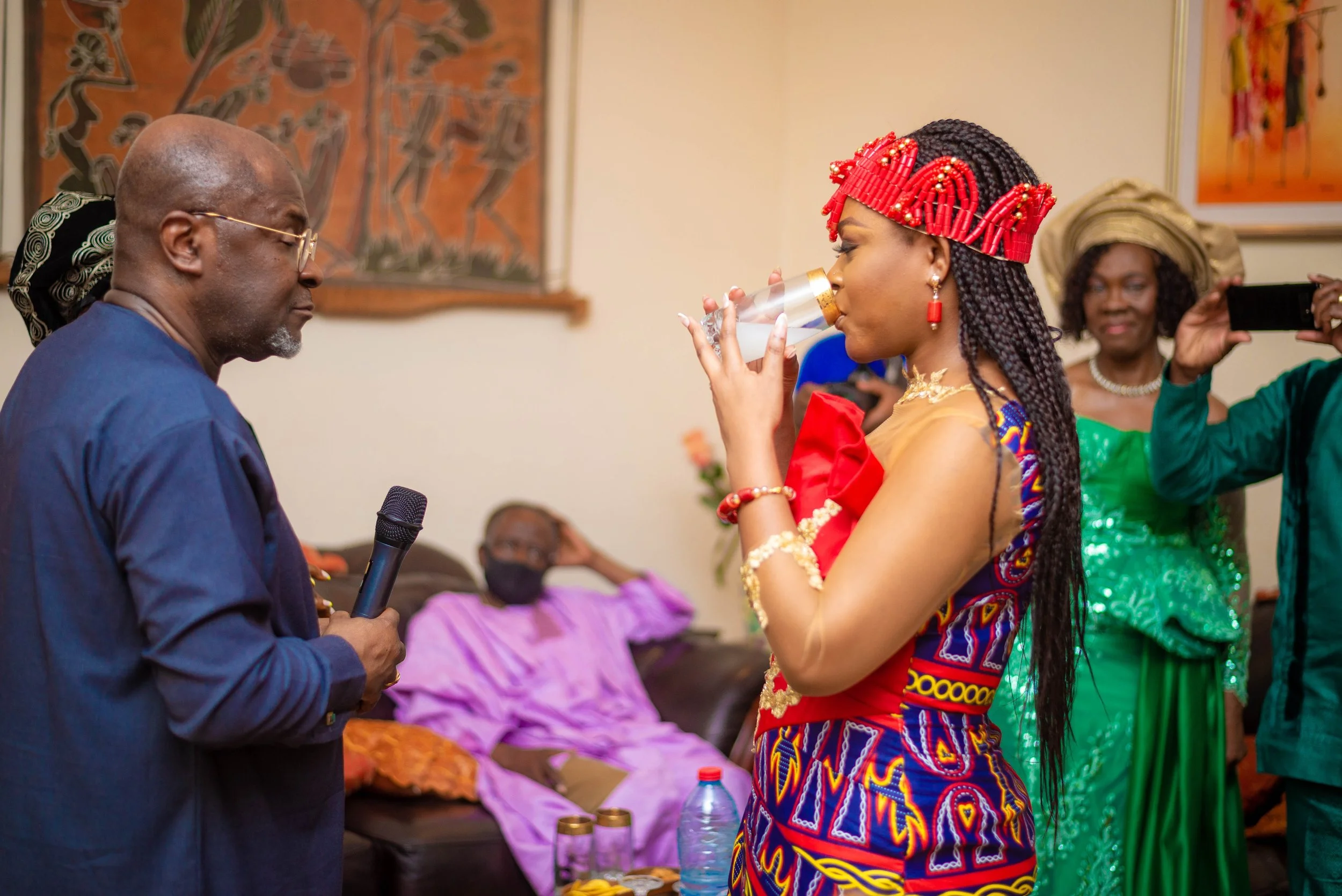
5. Ntsei Moh: Ancestral Blessings
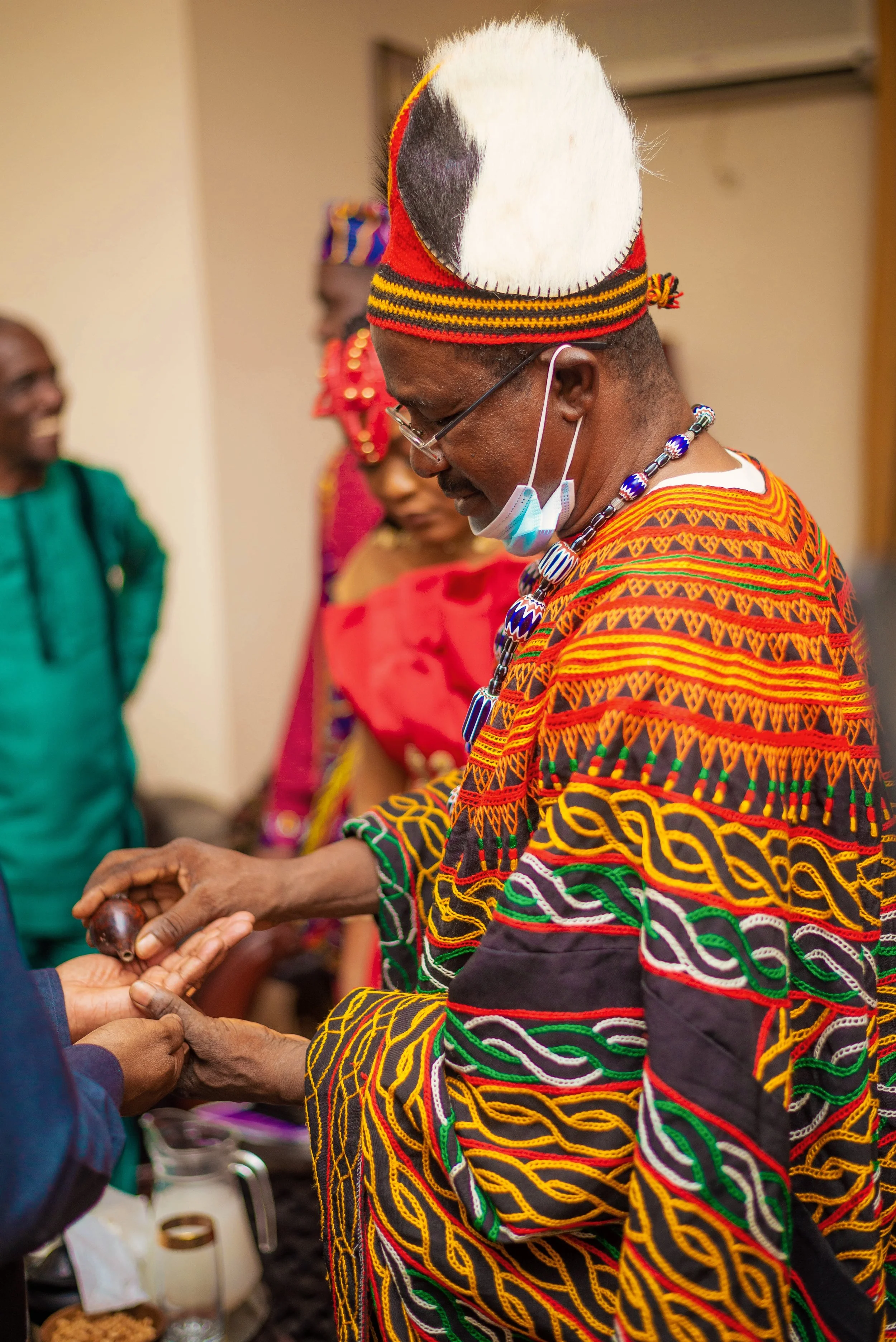
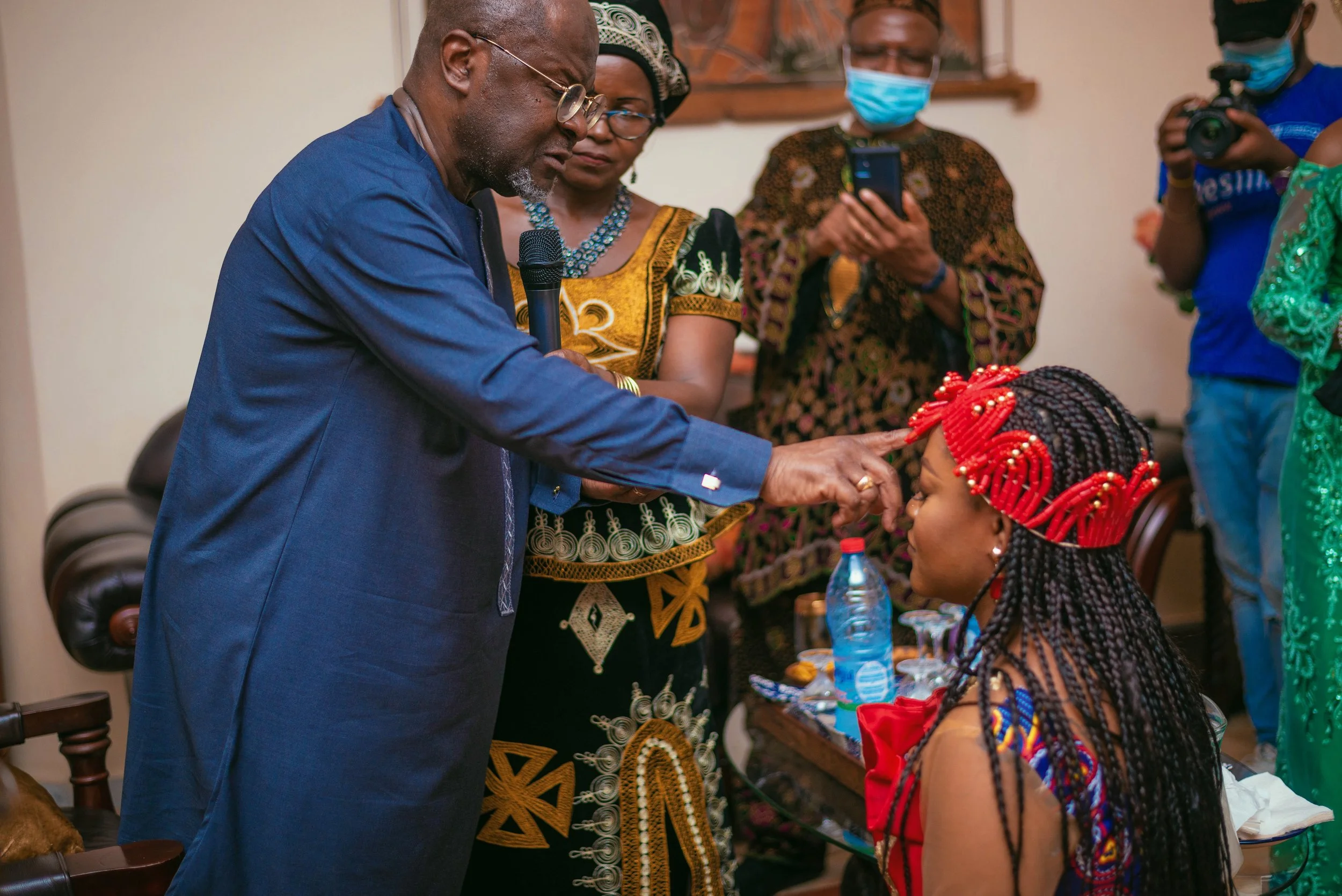
In tandem with my father, the chief — adorned in regal attire — invoked the spirits of the ancestors. This poignant benediction was a spiritual connection to the past, present, and future. Palm wine and kola nuts — significant symbols of ancestral shrines — took center stage, where twe sought blessings, guidance and protection from their ancestors. We offered prayers and libations to honor those who came before us — this sacred act symbolizing our connection to our lineage and the spiritual foundation of our union.
6. Ntseh Mgweh Per Ndueh: Spiritual Witnesses
In the presence of our ancestors, we are now married and made one. I have left my family’s home and joined a new family. Everyone celebrates by drinking palm wine.
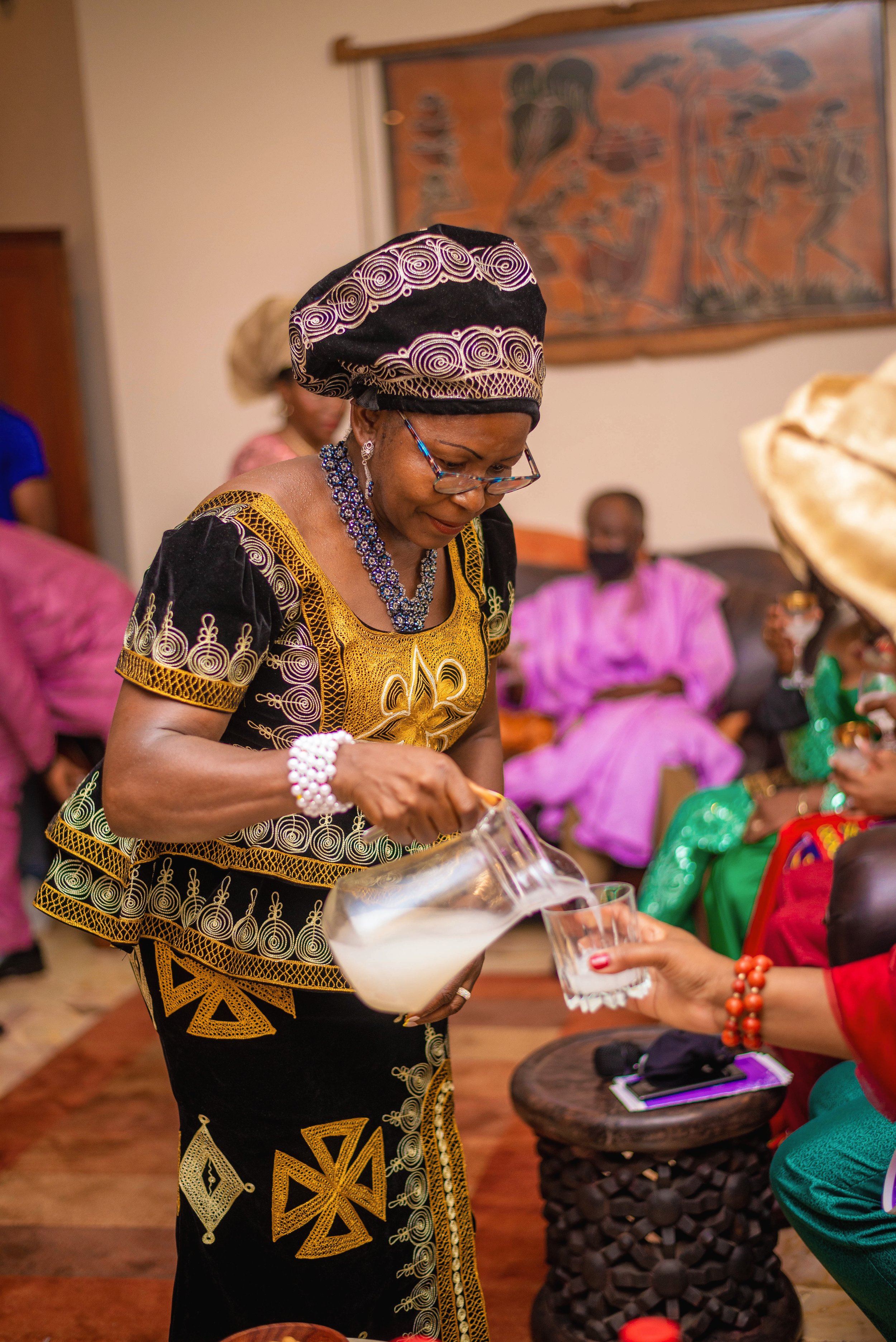
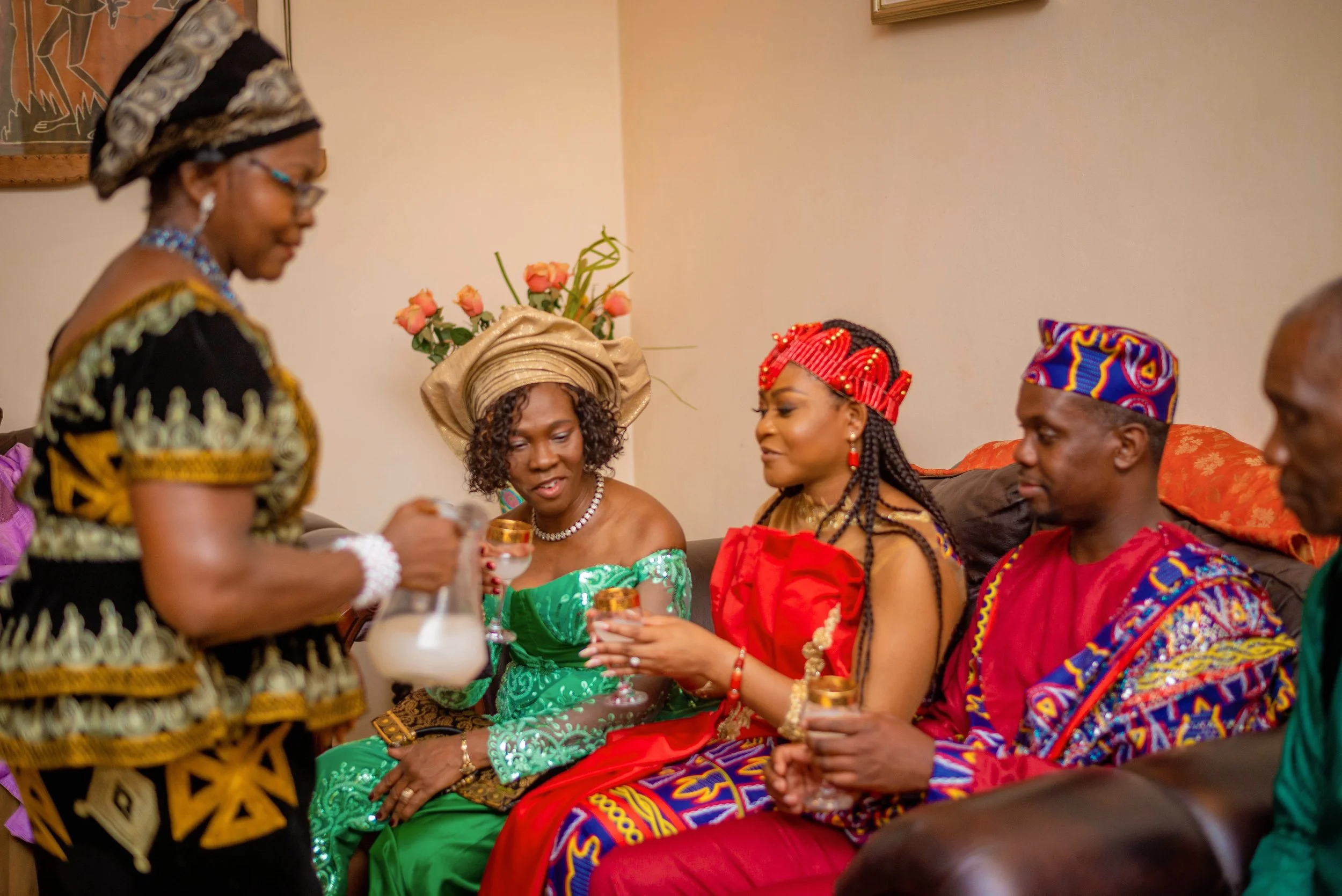
7. Ngapteh Enezeuh Ambuoh Lah: Gifts and more
What follows is a moment of respect, acknowledgement and generosity. The groom's family, having already agreed upon a bride price with the bride’s family in private, distributes the gifts to various members of the bride’s family on both my mother and father’s sides. It included some cash, a goat, lots of palm wine, salt, blankets, and because Brett’s family is Jamaican, some good ol’ Appleton rum. This offering represented the groom's commitment to Sandra and his reverence for her family.
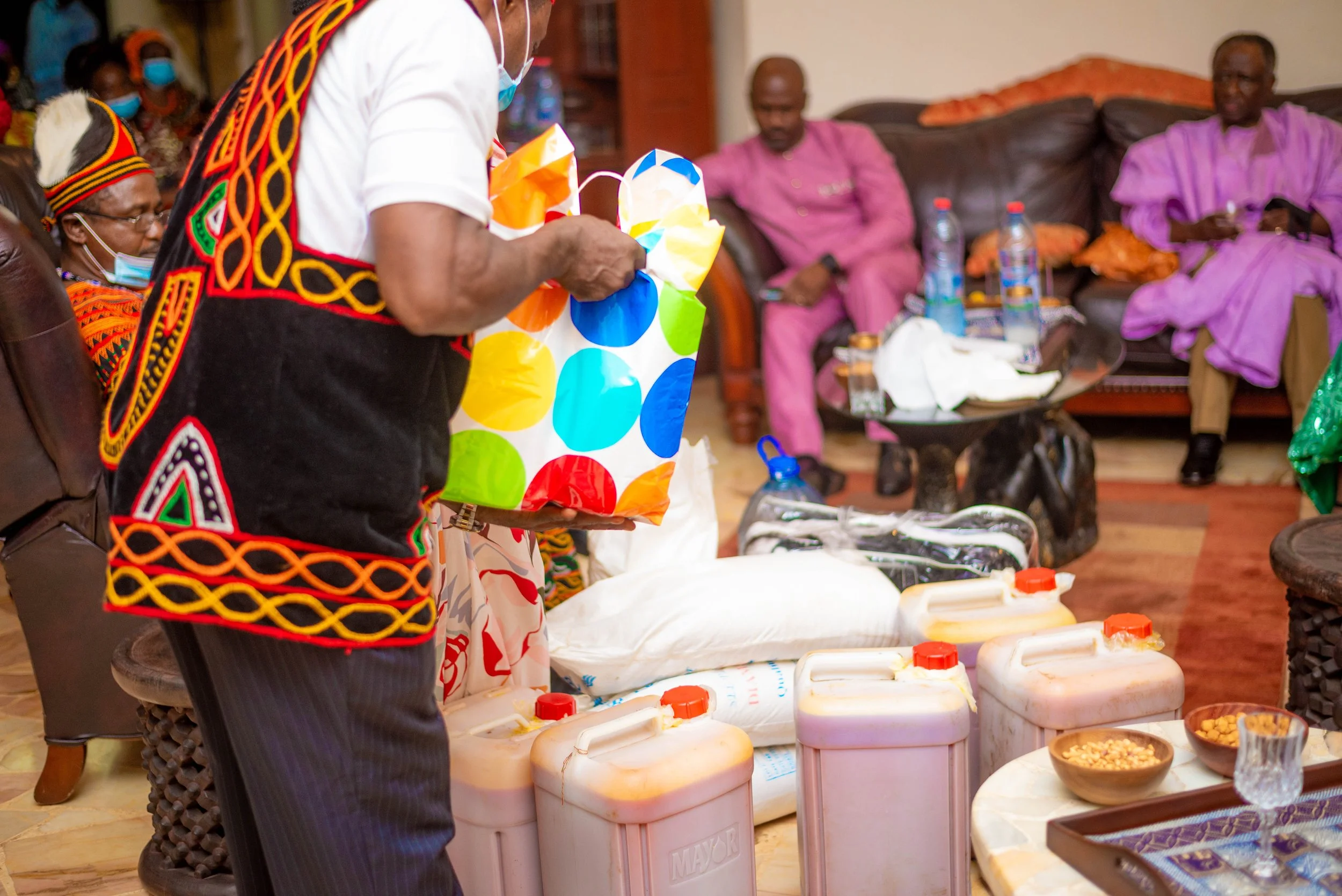
8. Le Kaack: Eat, Drink and Be Merry
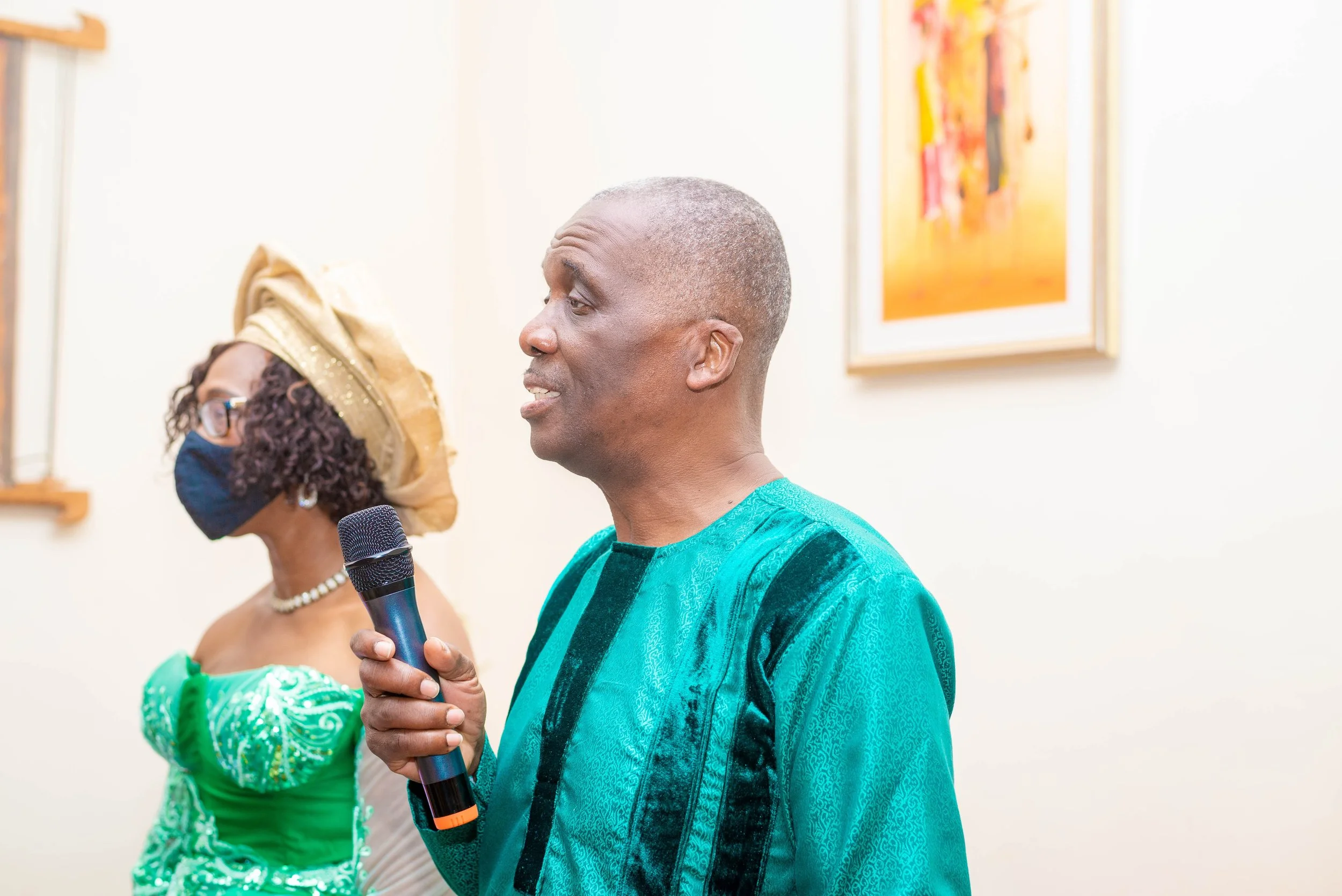
The wedding reception was a jubilant celebration of love. A huge feast, vibrant dances, rhythmic prayers, and traditional songs filled the air as family and friends came together to honor our union. The joyful ambiance echoed the deep sense of community and the enduring culture of the M’mucok people. Amidst the celebrations, there were speeches made by members of both my family and Brett’s, and acknowledgement of the other royal members and distinguished guests in the room.
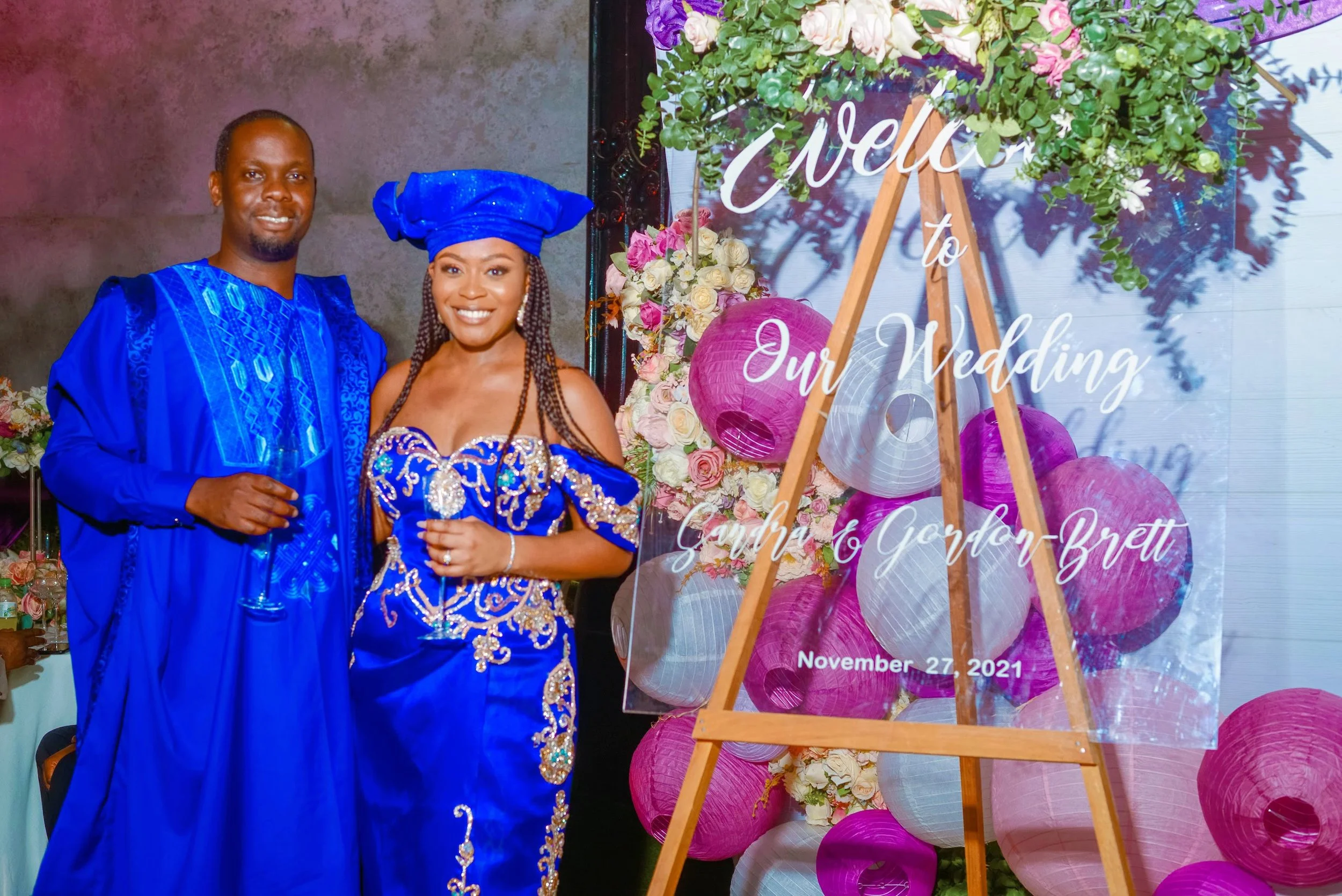
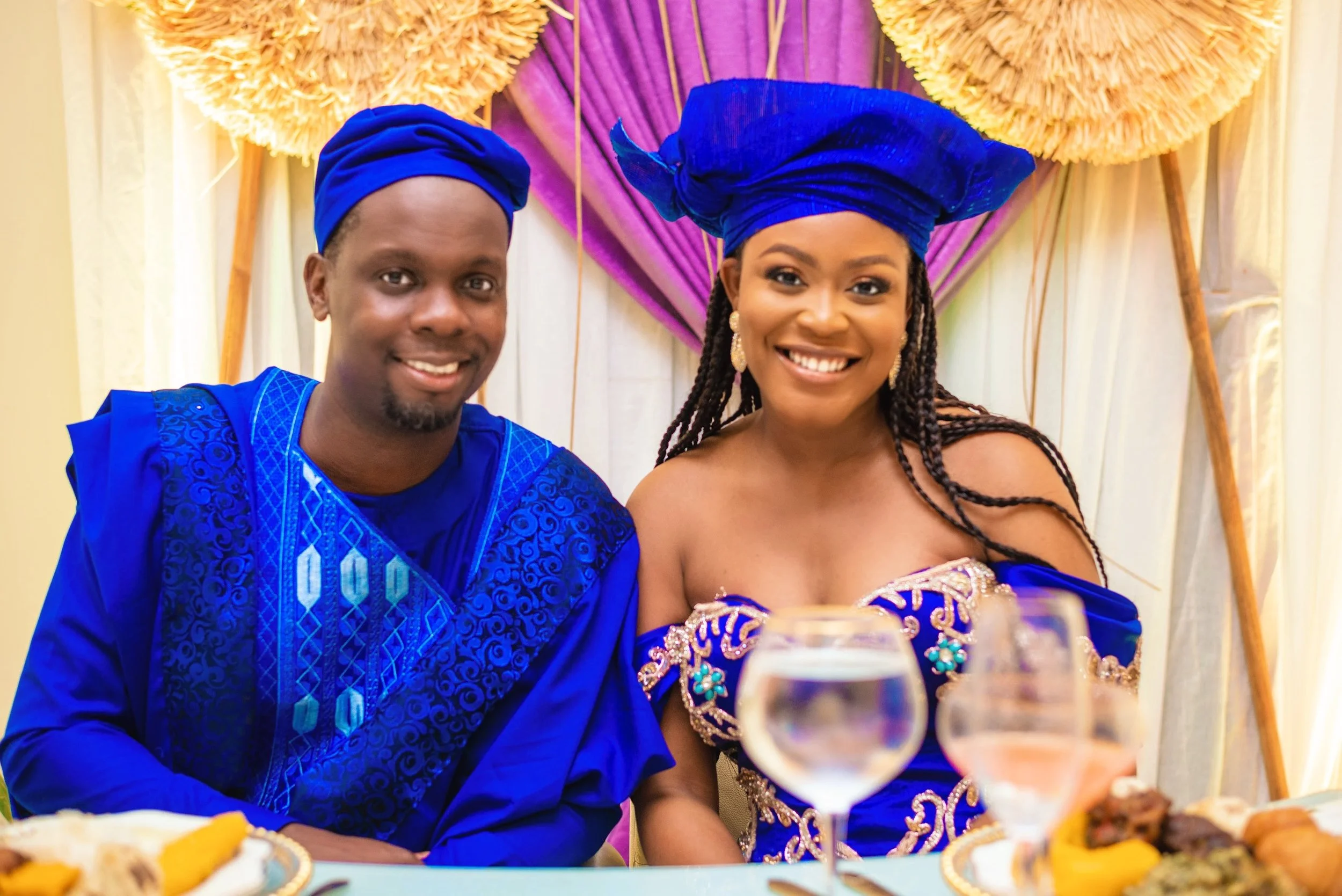
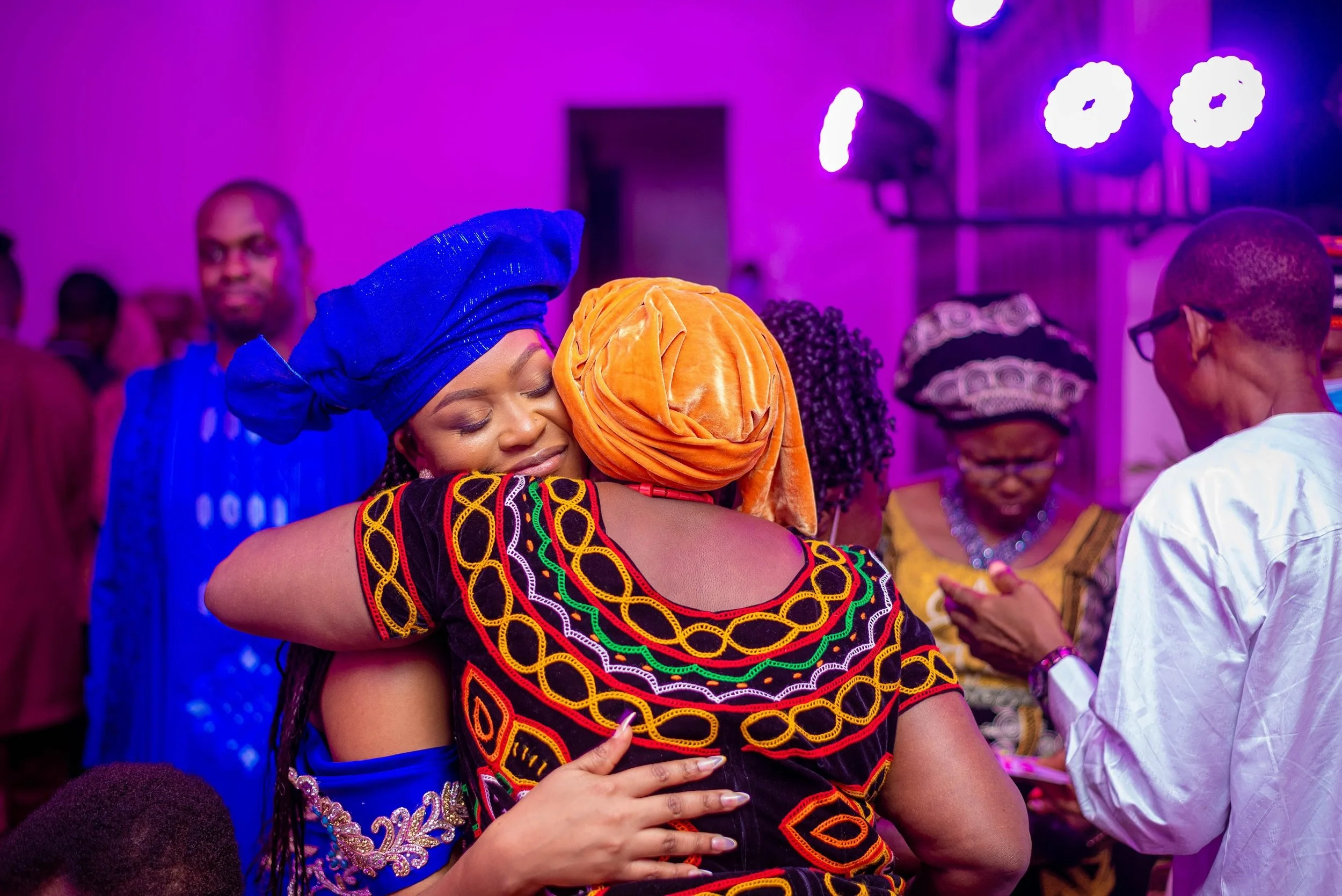
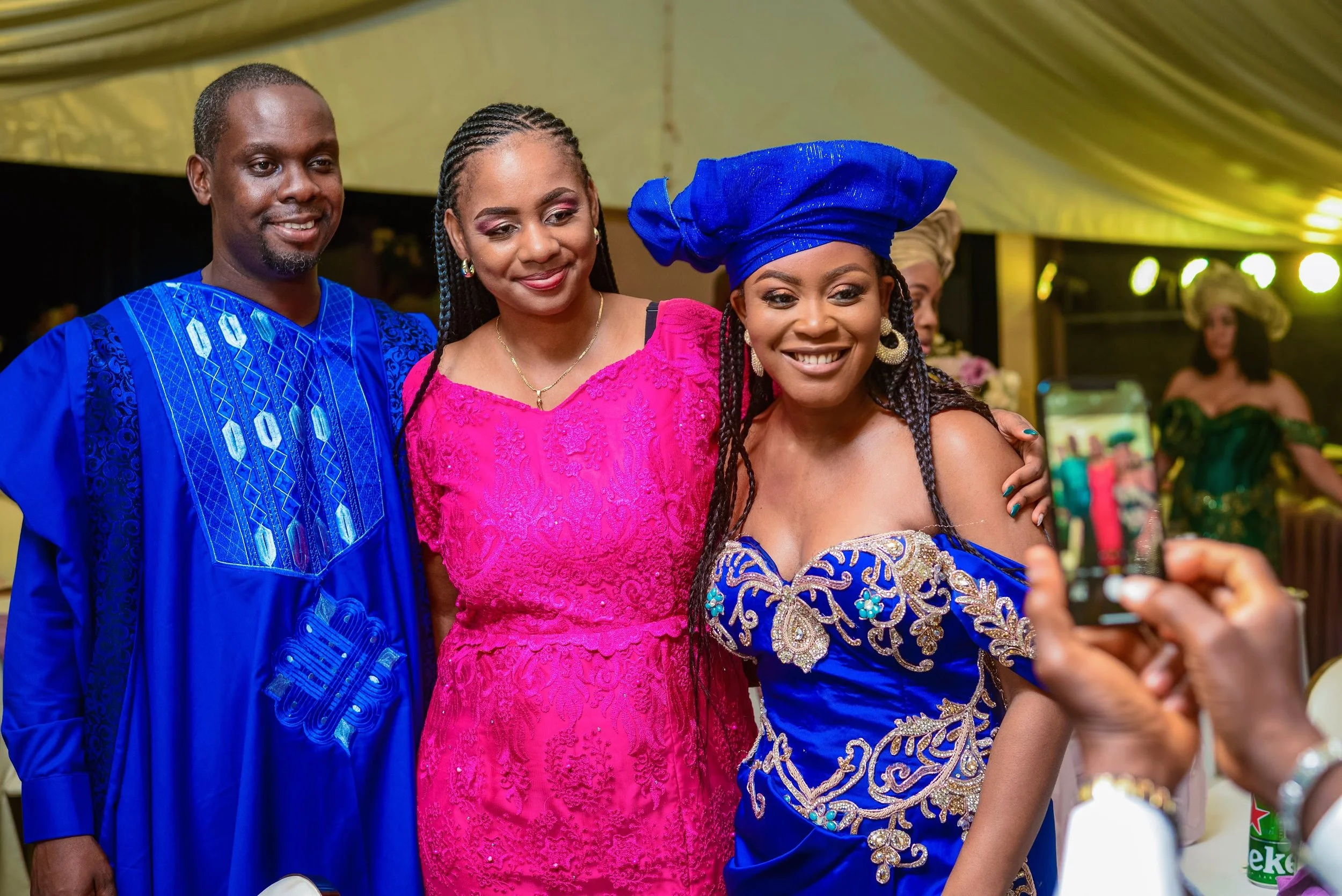
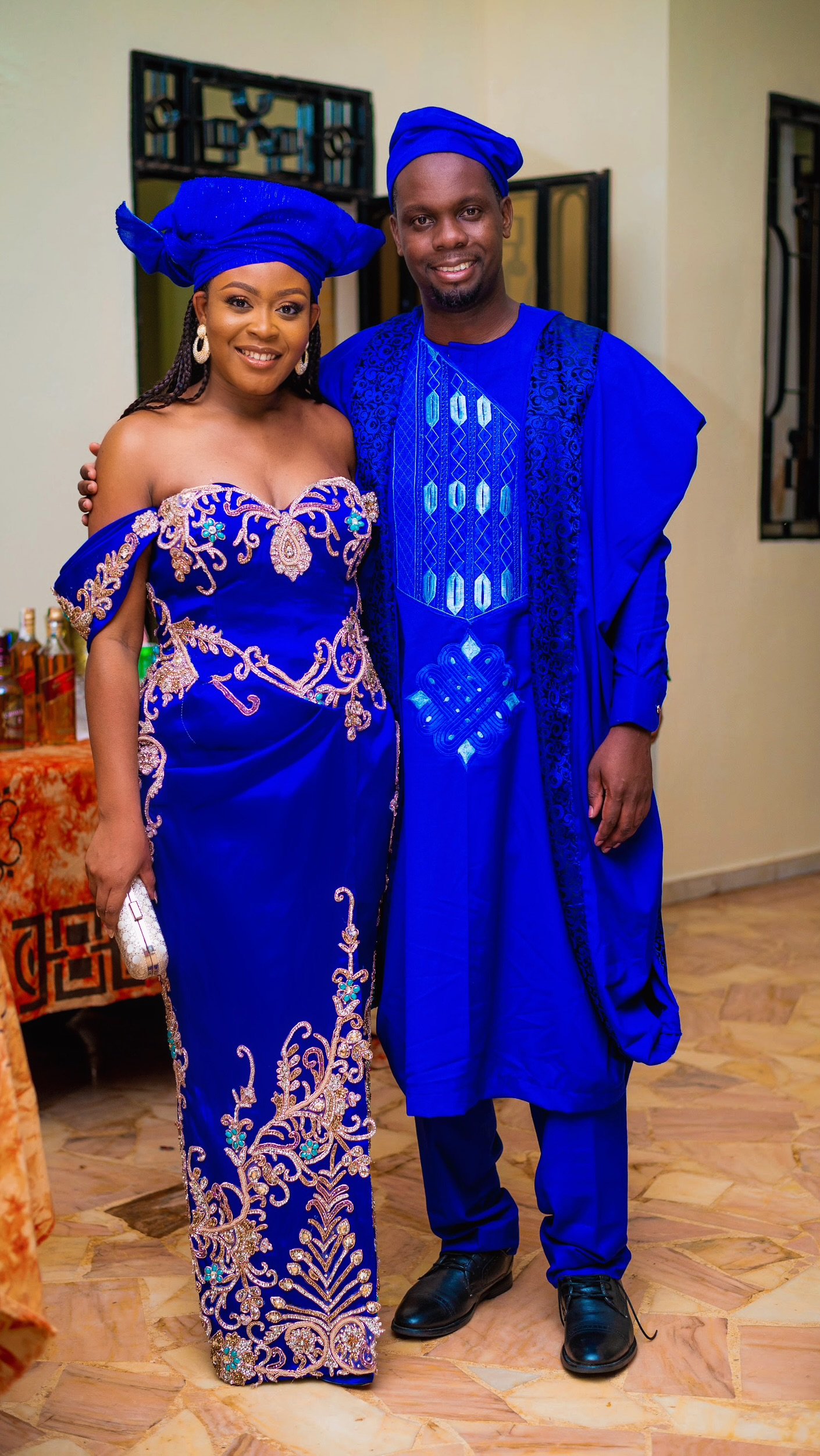
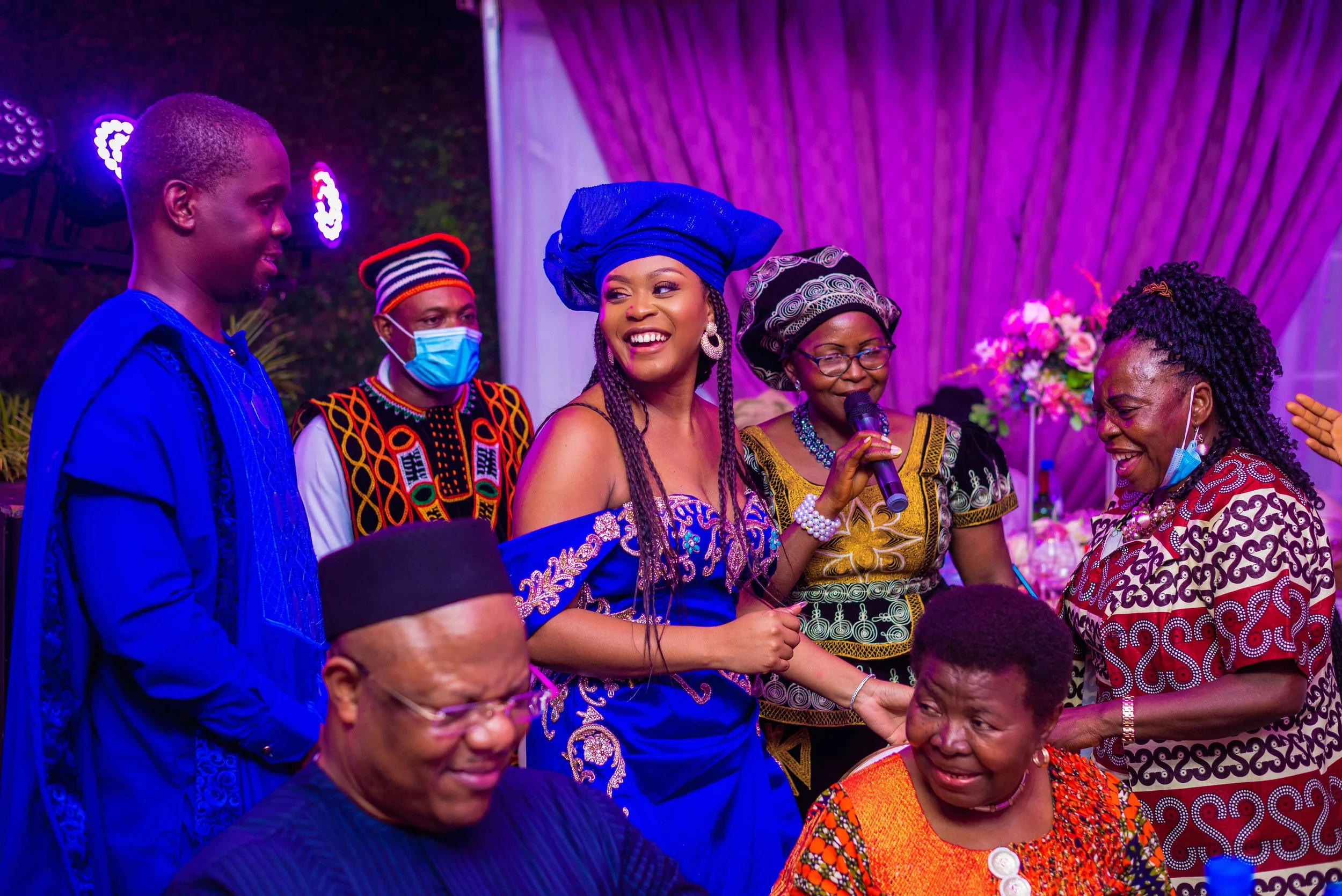
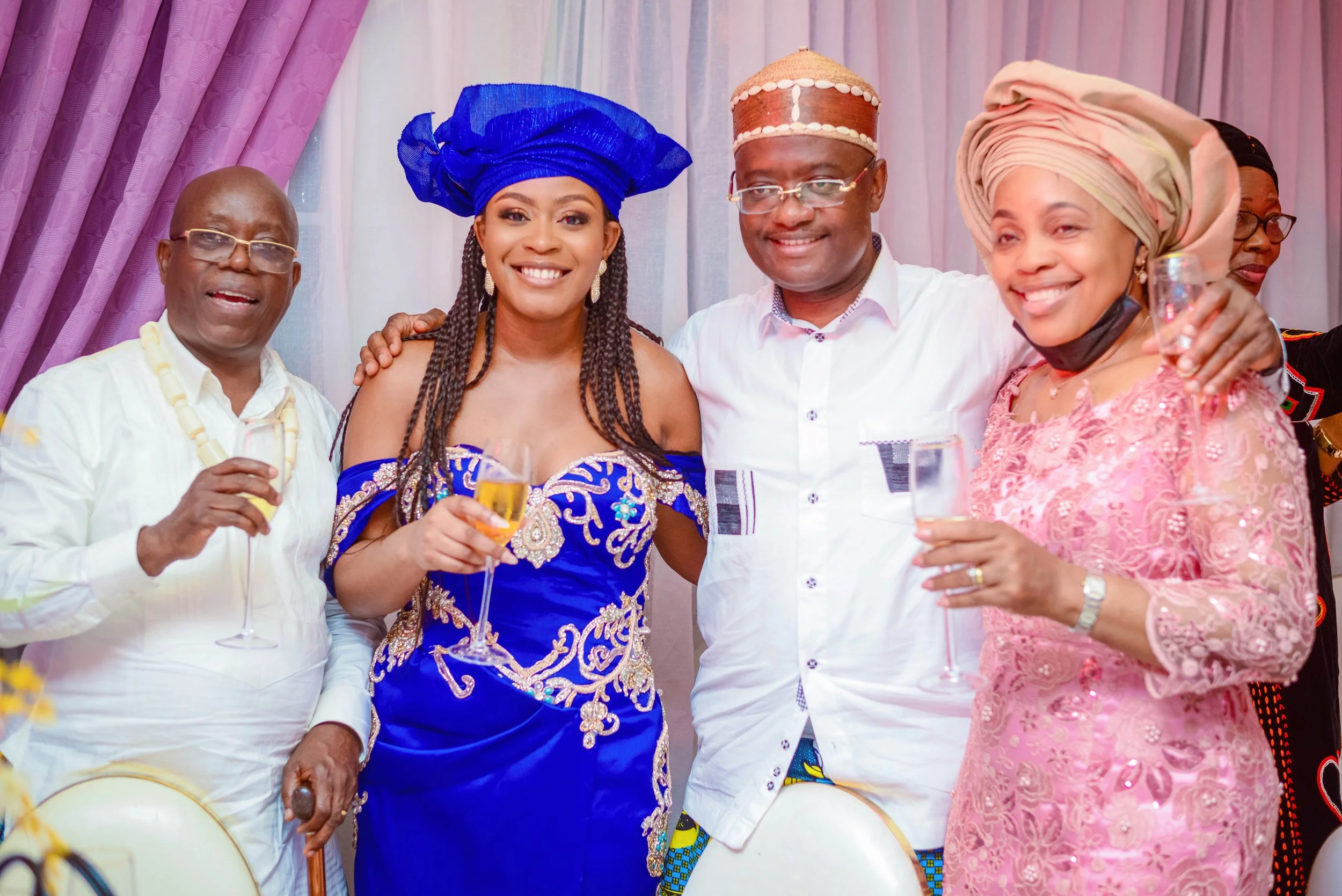
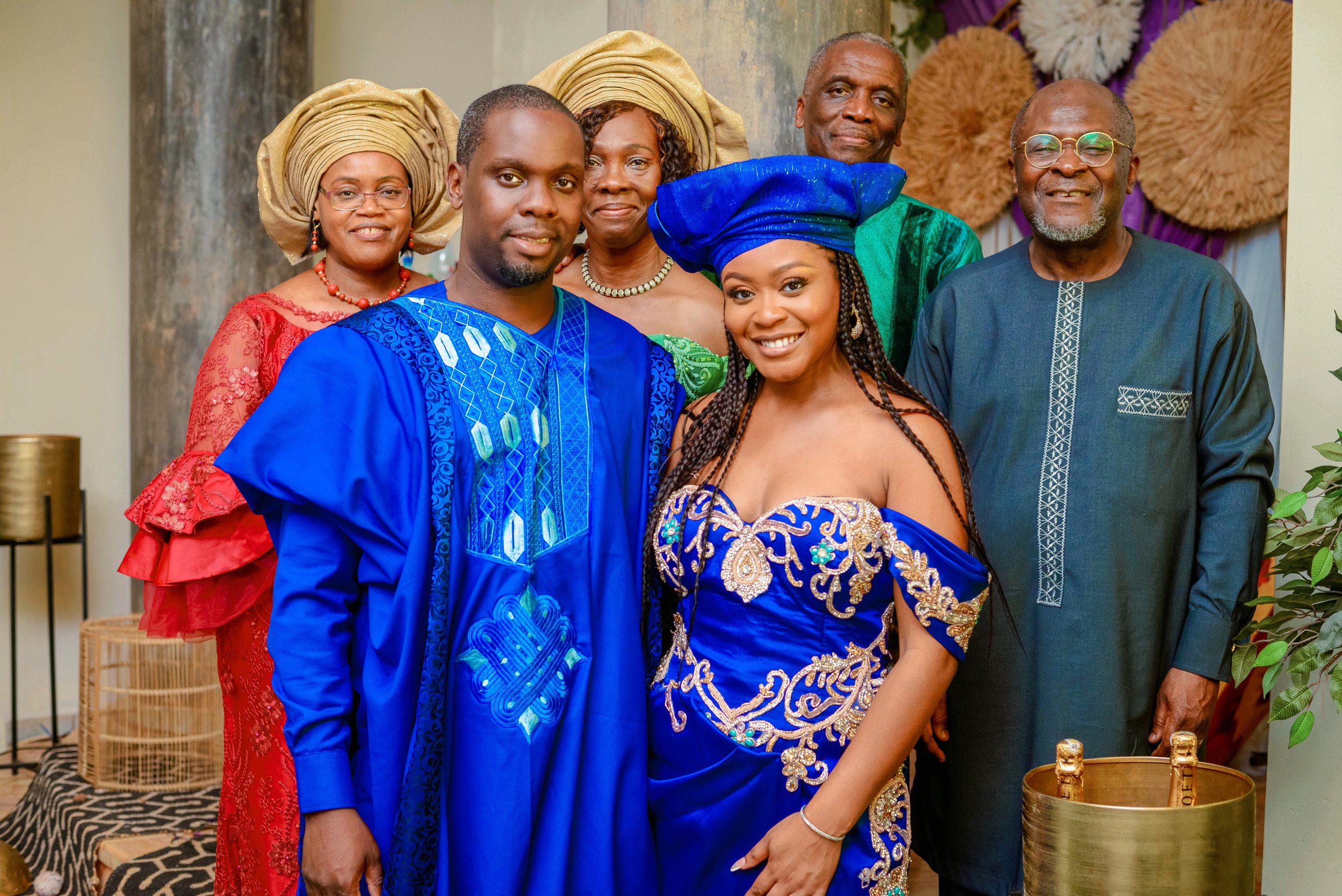
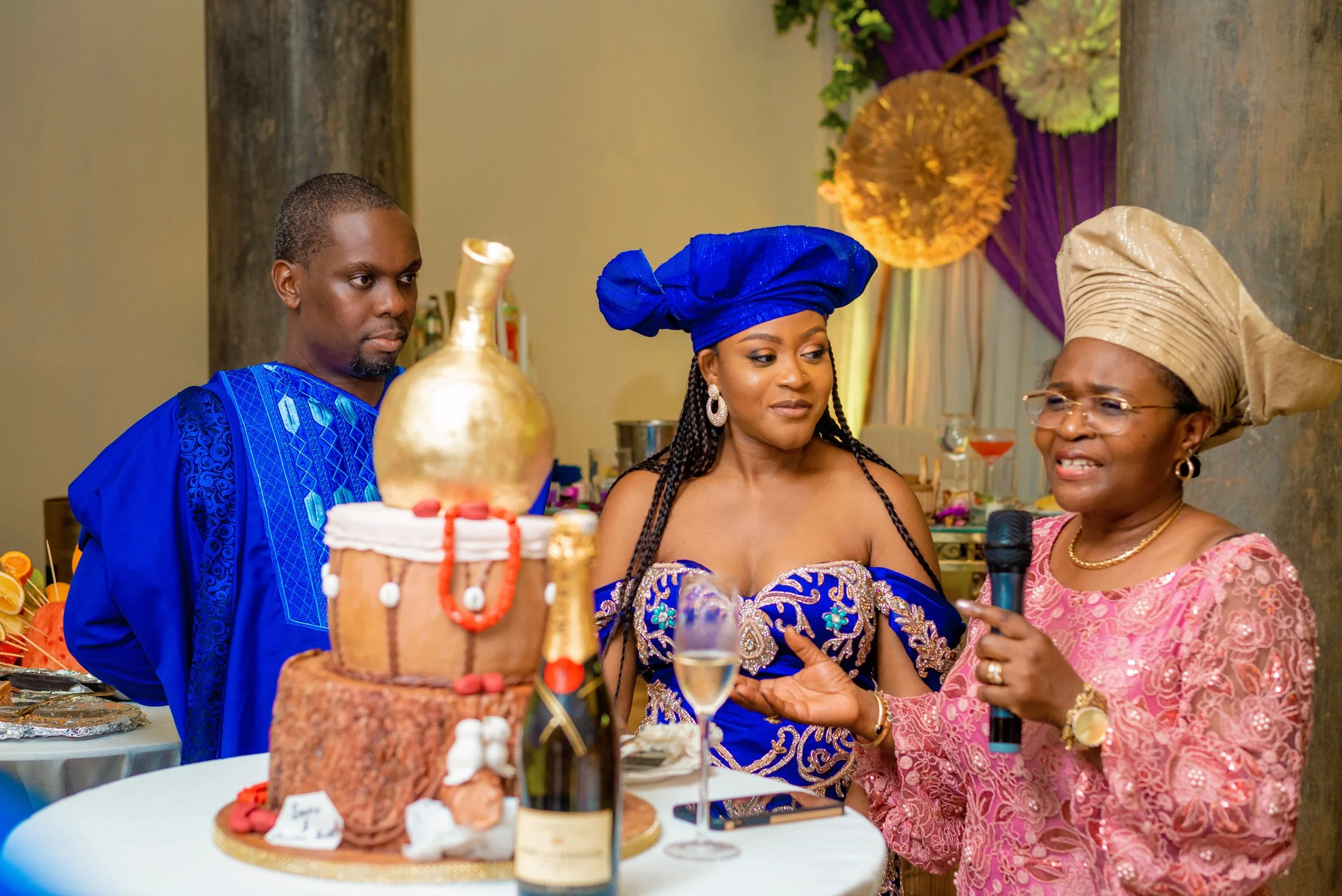
Our traditional wedding was an amazing, educational journey for both of us, and one I appreciated immensely. It reminded me to never take for granted my rich heritage, even though I don’t engage in it often. Each tradition and each ritual painted a portrait of unity and how important the community is in lifting and supporting a marriage. As the night continued, the warmth, love and historical significance reverberated in the air, forever etched in my memory.
Have you been to a Cameroonian (or any other African) traditional wedding? Tell me about the customs in your culture!
Sandi 🖤
Comprehensive List of Vendors
Location: Private Home in Yaounde, Cameroon
Decor: Youvana Events
Catering: Youvana Events
Cake: Sissy Belle
Music: Locally sourced
Photography & Videography: Stanley Photoworks
Stationery: Truly Engaging
Makeup Artist: Zinky Studios
Hair: Nadege (Local Stylist)
Hair Piece: Locally sourced
Outfit 1: Locally sourced
Bride & Groom Matching Outfit 1: DWare Couture
Bride & Groom Matching Outfit 2: Ann Usman
Wedding Jewelry: Jennifer Behr
Bride’s Shoes 1: Rene Caovilla
Bride’s Shoes 2: Manolo Blahnik
Groom’s Shoes: Armani